 |
I've been telling friends around town, and those in Miami and California and other places, about my blog. Most have been supportive. But some, mostly here in Smallville, were a bit shocked that I, a white.....a pale white man--would write about Black history. And they remain confused even when I tell them about the man in the bank who didn't get Black History Month. Everyone I've talked to says they learned all there is about Black history in school. Then I came across this story, and I realized they haven't learned about Black history because it's being untaught, whitewashed, at our historical. 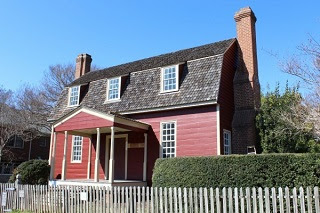 Oh yeah, they owned slaves, too; slaves who cooked and cleaned and worked in their fields, but the museum doesn't seem inclined to mention them. The folks who run the Joel Lane House Museum are, quote, "uncomfortable talking about the practices that allowed wealthy owners to prosper." Imagine how the slaves must felt. But if you're uncomfortable talking about the slaves who were bought and sold like farm goods, who worked in the fields from sun-up till sun-down all day, every day, all year, the slaves who lived in squalor so you could live in splendor, the slaves who fed your children and washed your sheets and tucked you in at night, by all means, leave them out of the story. It's not like they were people, anyway. And, apparently, this isn't a new thing. Apparently at many North Carolina plantations the talk of slaves and what they did and how they lived, is put aside for discussions on "architecture, furnishings and gardens," you know, important stuff. This here's my favorite quote, from a woman named Belle Lang, who works at the Joel House Museum. She says, "It's a hard thing to talk about, because there's very little good you can say about it....It's just awkward. It's such a black period in our history." Very little good you can say about it? Really Belle, because I thought slavery was great. Capturing people in their own countries and piling them up in boats like living cargo, transporting them across the seas to be sold as household appliances and farm implements, to be beaten and sold and raped and treated like shit. There isn't anything good to talk about? But, as you say Belle, and I'll forgive your pun, it was a "black period" in history. And, I love this one, too: there are some of these plantation tours that present the image of the "happy slaves cared for by benevolent masters." At one such plantation, Darshana Hall Plantation, they are telling stories of lovely slave-owners hiring doctors to tend to their slaves and even giving them a pond so they can fish! Slavery has been Disney-fied in North Carolina. The costumes! The music! the chains! Hiring a doctor to tend to the slaves did not benefit the slaves, it benefited the owners. The same way you hire a veterinarian to check your horses and cows so you can make your money. Slaves were treated far worse than farm animals. Meredith Hall, who owns Darshana, believes the story of slavery is important, but doesn't think all owners were cruel: "I think that there's a real misconception of slavery; it was a relative thing … This family tried to treat people well. They kept the families together. ... They had a pretty good reputation with regard to slavery." Good reputation regarding the imprisoning of people to do your labor for pennies, to serve as concubines for pennies, to be bought and sold. Good reputation my ass. Now, not all these tourist plantations are whitewashing slavery.  Can you imagine that same group going to the Joel Lane House, or Darshana, and discovering that, according to guides and guidebooks, slavery didn't exist at the plantation or, if it did, all were happy campers, loving a life in captivity where you weren't allowed education—lest you get too smart for your britches—and weren't allowed to vote, speak, think, o feel anything the master didn't want you to think or feel? History is cyclical. Go back and look, and you'll see the same things happening over and over and over again, because we didn't learn from the mistakes. And if we continue to whitewash slavery, then the knowledge of it, the horrors of it, will disappear. All the easier to bring it back. from The News Observer |

Monday, February 17, 2025
Repost: Black History Month: Whitewashing Slavery


Monday, February 10, 2025
Repost: Black History Month: Langston Hughes
 |
I have three favorite poets--not that I know anything about poetry, but I know what I like. I like Thom Gunn, WH Auden, and Langston Hughes.  Langston began writing poetry at around age 12, and was selected as Class Poet of his high school. He always wrote. In 1923, Hughes traveled to Senegal, Nigeria, the Cameroons, Belgium Congo, Angola, and Guinea in Africa, Italy, France, Russia and Spain. No matter where he went, abroad or at home in Washington, D.C. or Harlem, he loved sitting in clubs listening to jazz and the blues, writing. Jazz and the blues brought a new sense of rhythm to his poems, and in 1924 he returned to Harlem, during the period known as the Harlem Renaissance, where his work was frequently published. "I tried to write poems like the songs they sang on Seventh Street...[these songs] had the pulse beat of the people who keep on going." Langston Hughes was a prolific poet and writer. In the forty years between his first book in 1926 and his death in 1967, he wrote sixteen books of poems, two novels, three collections of short stories, four volumes of "editorial" and "documentary" fiction, twenty plays, children's poetry, musicals and operas, three autobiographies, a dozen radio and television scripts and dozens of magazine articles. In addition, he edited seven anthologies. He listened to jazz and put the music in his words. Langston Hughes died of cancer on May 22, 1967. _________________________
Let it be the dream it used to be. Let it be the pioneer on the plain Seeking a home where he himself is free. (America never was America to me.) Let America be the dream the dreamers dreamed-- Let it be that great strong land of love Where never kings connive nor tyrants scheme That any man be crushed by one above. (It never was America to me.) O, let my land be a land where Liberty Is crowned with no false patriotic wreath, But opportunity is real, and life is free, Equality is in the air we breathe. (There's never been equality for me, Nor freedom in this "homeland of the free.") Say, who are you that mumbles in the dark? And who are you that draws your veil across the stars? I am the poor white, fooled and pushed apart, I am the Negro bearing slavery's scars. I am the red man driven from the land, I am the immigrant clutching the hope I seek-- And finding only the same old stupid plan Of dog eat dog, of mighty crush the weak. I am the young man, full of strength and hope, Tangled in that ancient endless chain Of profit, power, gain, of grab the land! Of grab the gold! Of grab the ways of satisfying need! Of work the men! Of take the pay! Of owning everything for one's own greed! I am the farmer, bondsman to the soil. I am the worker sold to the machine. I am the Negro, servant to you all. I am the people, humble, hungry, mean-- Hungry yet today despite the dream. Beaten yet today-- O, Pioneers! I am the man who never got ahead, The poorest worker bartered through the years. Yet I'm the one who dreamt our basic dream In the Old World while still a serf of kings, Who dreamt a dream so strong, so brave, so true, That even yet its mighty daring sings In every brick and stone, in every furrow turned That's made America the land it has become. O, I'm the man who sailed those early seas In search of what I meant to be my home-- For I'm the one who left dark Ireland's shore,And Poland's plain, and England's grassy lea, And torn from Black Africa's strand I came To build a "homeland of the free. "The free? Who said the free? Not me? Surely not me? The millions on relief today? The millions shot down when we strike? The millions who have nothing for our pay? For all the dreams we've dreamed And all the songs we've sung And all the hopes we've held And all the flags we've hung, The millions who have nothing for our pay-- Except the dream that's almost dead today. O, let America be America again-- The land that never has been yet-- And yet must be--the land where every man is free. The land that's mine--the poor man's, Indian's, Negro's, ME-- Who made America, Whose sweat and blood, whose faith and pain, Whose hand at the foundry, whose plow in the rain, Must bring back our mighty dream again. Sure, call me any ugly name you choose-- The steel of freedom does not stain. From those who live like leeches on the people's lives, We must take back our land again, America! O, yes,I say it plain, America never was America to me, And yet I swear this oath-- America will be! Out of the rack and ruin of our gangster death, The rape and rot of graft, and stealth, and lies, We, the people, must redeem The land, the mines, the plants, the rivers. The mountains and the endless plain-- All, all the stretch of these great green states-- And make America again! Langston Hughes |
Tuesday, May 05, 2009
It Ain't Easy Being Gay

You can't get married in Senegal. You can't be buried in Senegal.
Last weekend Senegalese villagers dug up the body of a man because they believed him to be gay, and did not want him buried in the Muslim cemetery. Thies village police officers were called out after villagers exhumed the body of a man who had died that day, in the hospital, of natural causes.
"We intervened and the people dispersed. The parents put the body back in the tomb."a police officer said.
Monday, February 16, 2009
Whitewashing Slavery


I've been telling friends around town, and those in Miami and California and other places, about my blog. Most have been supportive. But some, mostly here in Smallville, were a bit shocked that I, a white.....a pale white man--would write about Black history. And they remain confused even when I tell them about the man in the bank who didn't get Black History Month.
Everyone I've talked to says they learned all there is about Black history in school.
Then I came across this story, and I realized they haven't learned about Black history because it's being untaught, whitewashed, at our historical.
There's a museum in Raleigh, North Carolina, the Joel Lane Museum House. Apparently it was owned by a very wealthy, prominent Raleigh family who owned some 6,000 acres.
Oh yeah, they owned slaves, too; slaves who cooked and cleaned and worked in their fields, but the museum doesn't seem inclined to mention them.
The folks who run the Joel Lane House Museum are, quote, "uncomfortable talking about the practices that allowed wealthy owners to prosper."
Imagine how the slaves must felt.
But if you're uncomfortable talking about the slaves who were bought and sold like farm goods, who worked in the fields from sun-up til sun-down all day, every day, all year, the slaves who lived in squalor so you could live in splendor, the slaves who fed your children and washed your sheets and tucked you in at night, by all means, leave them out of the story.
It's not like they were people, anyway.
And, apparently, this isn't a new thing. Apparently at many North Carolina plantations the talk of slaves and what they did and how they lived, is put aside for discussions on "architecture, furnishings and gardens," you know, important stuff.
This here's my favorite quote, from a woman named Belle Lang, who works at the Joel House Museum. She says, "It's a hard thing to talk about, because there's very little good you can say about it....It's just awkward. It's such a black period in our history."
Very little good you can say about it? Really Belle, because I thought slavery was great.
Capturing people in their own countries and piling them up in boats like living cargo, transporting them across the seas to be sold as household appliances and farm implements, to be beaten and sold and raped and treated like shit.
There isn't anything good to talk about?
But, as you say Belle, and I'll forgive your pun, it was a "black period" in history.
And, I love this one, too: there are some of these plantation tours that present the image of the "happy slaves cared for by benevolent masters." At one such plantation, Darshana Hall Plantation, they are telling story of lovely slave-owners hiring doctors to tend to their slaves, and even giving them a pond so they can fish!
Slavery has been Disney-fied in North Carolina.
The costumes! The music! the chains!
Hiring a doctor to tend to the slaves did not benefit the slaves, it benefited the owners. The same way you hire a veterinarian to check your horses and cows so you can make your money. Slaves were treated far worse than farm animals.
Meredith Hall, who owns Darshana, believes the story of slavery is important, but doesn't think all owners were cruel: "I think that there's a real misconception of slavery; it was a relative thing....This family tried to treat people well. They kept the families together. ... They had a pretty good reputation with regard to slavery."
Good reputation regarding the imprisoning of people to do your labor for pennies, to serve as concubines for pennies, to be bought and sold. Good reputation my ass.
Now, not all these tourist plantations are whitewashing slavery.
The Stagville Plantation, near Durham, saw a 100% increase in visitors from 2007 to 2008. But they make the story of slavery a major portion of the tour and of the discussion of plantation life in the Old South. Almost half the visitors to Stagsville are black, and "[o]ne group came from Senegal to see where their ancestors were taken."
Can you imagine that same group going to the Joel Lane House, or Darshana, and discovering that, according to guides and guidebooks, slavery didn't exist at the plantation, or, if it did, all were happy campers, loving a life in captivity where you weren't allowed education--lest you get too smart for your britches--and weren't allowed to vote, speak, think, o feel anything the master didn't want you to think or feel?
History is cyclical. Go back and look, and you'll see the same things happening over and over and over again, because we didn't learn from the mistakes. And if we continue to whitewash slavery, then the knowledge of it, the horrors of it, will disappear.
All the easier to bring it back.
Monday, February 09, 2009
Langston Hughes


His father, thinking poet was not a job for a man who needed to earn a living, encouraged Langston to pursue a more practical career, paying the tuition to Columbia University on the grounds Langston study engineering. After a short time, however, Langston Hughes dropped out of the program; but he continued writing poetry.
Let America be America Again
Let America be America again.