


 |
An uncompromising woman, Ida B. Wells-Barnett was a fearless anti-lynching crusader, suffragist, women's rights advocate, journalist, and speaker.  It was in Memphis, where Ida moved to live with aunt and younger sisters, that she first began to fight—literally—for racial and gender justice. In 1884 the conductor of the Chesapeake & Ohio Railroad Company asked Ida to give up her seat to a white man—she was ordered into the smoking, or "Jim Crow," car.—and she told the man … “I refused, saying that the forward car [closest to the locomotive] was a smoker, and as I was in the ladies' car, I proposed to stay. . . [The conductor] tried to drag me out of the seat, but the moment he caught hold of my arm I fastened my teeth in the back of his hand. I had braced my feet against the seat in front and was holding to the back, and as he had already been badly bitten he didn't try it again by himself. He went forward and got the baggageman and another man to help him and of course they succeeded in dragging me out.” Ida Wells was forcefully removed from the train as the white passengers applauded. Back home in Memphis, she immediately hired an attorney to sue the railroad and won her case in the local circuit courts. But the railroad company appealed to the Supreme Court of Tennessee, and it reversed the lower court's ruling. This was the first of many struggles Wells engaged, and from that moment forward, she worked fearlessly to overturn injustices against women and people of color. Her suit against the Chesapeake & Ohio Railroad Company gave rise to a new career as a journalist. Many newspapers wanted to hear the story of the 25-year-old schoolteacher who stood up against white supremacy. Her writing career blossomed in papers geared to African American and Christian audiences. In 1889 Wells became a partner in the Free Speech and Headlight, the newspaper owned by Rev. R. Nightingale—the pastor of Beale Street Baptist Church. He "counseled" his large congregation to subscribe to the paper and it flourished, allowing her to leave her position as a schoolteacher. In 1892 three of her friends—Thomas Moss, Calvin McDowell, and Henry Stewart—were lynched because their grocery store, People's Grocery Company, had taken away customers from competing white business. A group of angry white men thought they would "eliminate" the competition so they attacked People's grocery, but the owners fought back, shooting one of the attackers. Moss, McDowell and Stewart were arrested, but a lynch-mob broke into the jail, dragged them away from town, and brutally murdered all of them. Ida Wells wrote in The Free Speech: “The city of Memphis has demonstrated that neither character nor standing avails the Negro if he dares to protect himself against the white man or become his rival. There is nothing we can do about the lynching now, as we are out-numbered and without arms. The white mob could help itself to ammunition without pay, but the order is rigidly enforced against the selling of guns to Negroes. There is therefore only one thing left to do; save our money and leave a town which will neither protect our lives and property, nor give us a fair trial in the courts, but takes us out and murders us in cold blood when accused by white persons.” Many people took Wells' advice and left town; others in the Black community organized a boycott of white-owned businesses to try and stem the threat, the terror, of lynchings. Ida's newspaper office was destroyed as a result of her stories of the murder of her three friends and she opted to leave Memphis for Chicago, where she continued her blistering attacks on Southern injustices, especially through investigation to expose the fraudulent "reasons" given to lynch Black men, which by now had become a common occurrence. In Chicago, she developed numerous African American women’s organizations, but she remained diligent in her anti-lynching crusade, writing Southern Horrors: Lynch Law in All Its Phases. She was also a tireless worker for women's right to vote and marched in the 1913 march for universal suffrage in Washington, D.C. Not able to tolerate injustice of any kind, Ida B. Wells, along with Jane Addams, successfully blocked the establishment of segregated schools in Chicago. In 1895 Wells married the editor of one of Chicago's early Black newspapers, Attorney F. L. Barnett, and announced she would retire to the privacy of her home.. She didn’t stay retired for long; she continued to write and to organize, and in 1906 she, along with W. E.B. DuBois and others, further the Niagara Movement—a civil rights organization that fought against racial segregation and disenfranchisement for African Americans—and she was one of two African American women to sign "the call" to form the NAACP in 1909. As late as 1930, disgusted by the nominees of the major parties to the state legislature, Wells-Barnett decided to run for the Illinois State legislature, making her one of the first Black women to run for public office in the United States. A year later, she passed away after a lifetime crusading for justice. I wonder what she might have said about a woman running for president in 2008, about a Black man becoming president in 2008 and I like to think she was smiling and saying: "I told you so." |
 |
I've been telling friends around town, and those in Miami and California and other places, about my blog. Most have been supportive. But some, mostly here in Smallville, were a bit shocked that I, a white.....a pale white man--would write about Black history. And they remain confused even when I tell them about the man in the bank who didn't get Black History Month. Everyone I've talked to says they learned all there is about Black history in school. Then I came across this story, and I realized they haven't learned about Black history because it's being untaught, whitewashed, at our historical. 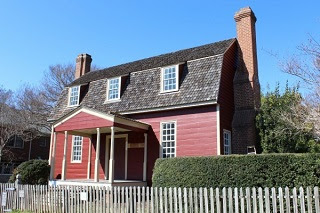 Oh yeah, they owned slaves, too; slaves who cooked and cleaned and worked in their fields, but the museum doesn't seem inclined to mention them. The folks who run the Joel Lane House Museum are, quote, "uncomfortable talking about the practices that allowed wealthy owners to prosper." Imagine how the slaves must felt. But if you're uncomfortable talking about the slaves who were bought and sold like farm goods, who worked in the fields from sun-up till sun-down all day, every day, all year, the slaves who lived in squalor so you could live in splendor, the slaves who fed your children and washed your sheets and tucked you in at night, by all means, leave them out of the story. It's not like they were people, anyway. And, apparently, this isn't a new thing. Apparently at many North Carolina plantations the talk of slaves and what they did and how they lived, is put aside for discussions on "architecture, furnishings and gardens," you know, important stuff. This here's my favorite quote, from a woman named Belle Lang, who works at the Joel House Museum. She says, "It's a hard thing to talk about, because there's very little good you can say about it....It's just awkward. It's such a black period in our history." Very little good you can say about it? Really Belle, because I thought slavery was great. Capturing people in their own countries and piling them up in boats like living cargo, transporting them across the seas to be sold as household appliances and farm implements, to be beaten and sold and raped and treated like shit. There isn't anything good to talk about? But, as you say Belle, and I'll forgive your pun, it was a "black period" in history. And, I love this one, too: there are some of these plantation tours that present the image of the "happy slaves cared for by benevolent masters." At one such plantation, Darshana Hall Plantation, they are telling stories of lovely slave-owners hiring doctors to tend to their slaves and even giving them a pond so they can fish! Slavery has been Disney-fied in North Carolina. The costumes! The music! the chains! Hiring a doctor to tend to the slaves did not benefit the slaves, it benefited the owners. The same way you hire a veterinarian to check your horses and cows so you can make your money. Slaves were treated far worse than farm animals. Meredith Hall, who owns Darshana, believes the story of slavery is important, but doesn't think all owners were cruel: "I think that there's a real misconception of slavery; it was a relative thing … This family tried to treat people well. They kept the families together. ... They had a pretty good reputation with regard to slavery." Good reputation regarding the imprisoning of people to do your labor for pennies, to serve as concubines for pennies, to be bought and sold. Good reputation my ass. Now, not all these tourist plantations are whitewashing slavery.  Can you imagine that same group going to the Joel Lane House, or Darshana, and discovering that, according to guides and guidebooks, slavery didn't exist at the plantation or, if it did, all were happy campers, loving a life in captivity where you weren't allowed education—lest you get too smart for your britches—and weren't allowed to vote, speak, think, o feel anything the master didn't want you to think or feel? History is cyclical. Go back and look, and you'll see the same things happening over and over and over again, because we didn't learn from the mistakes. And if we continue to whitewash slavery, then the knowledge of it, the horrors of it, will disappear. All the easier to bring it back. from The News Observer |
 |
Plessy vs. Ferguson  One drop of "colored" blood made you "colored." Plessy went to court and argued, in Homer Adolph Plessy v. The State of Louisiana, that the Separate Car Act violated the Thirteenth and Fourteenth Amendments to the Constitution. He was found guilty of refusing to leave the "white" car. Homer Plessy appealed to the Supreme Court of Louisiana, which upheld Ferguson's decision. In 1896, the Supreme Court of the United States heard Plessy's case and found him guilty once again. The lone dissenter, Justice John Harlan, showed incredible foresight when he wrote: "Our Constitution is color-blind, and neither knows nor tolerates classes among citizens. In respect of civil rights, all citizens are equal before the law...In my opinion, the judgment this day rendered will, in time, prove to be quite as pernicious as the decision made by this tribunal in the Dred Scott case...The present decision, it may well be apprehended, will not only stimulate aggressions, more or less brutal and irritating, upon the admitted rights of colored citizens, but will encourage the belief that it is possible, by means of state enactments, to defeat the beneficent purposes which the people of the United States had in view when they adopted the recent amendments of the Constitution." Over time, the words of Justice Harlan rang true. The Plessy decision set the precedent that "separate" facilities for blacks and whites were constitutional as long as they were "equal." The "separate but equal" doctrine was quickly extended to cover many areas of public life, such as restaurants, theaters, restrooms, and public schools. Not until 1954, in the equally important Brown v. Board of Education decision, would the "separate but equal" doctrine be struck down.  But who was Jim Crow? It's thought that he was a slave from Cincinnati, Ohio; others say he was from Charleston, South Carolina. Another faction holds that Jim Crow derived from old man Crow, the slaveholder. A final group says that the Crow came from the simile, black as a crow. Whatever the case, by 1838, the term was wedged into the language as a synonym for Negro. Thus, "Jim Crow laws" meant Negro laws. |
 |
The Dred Scott Case  During the 1830s, the owner of a slave named Dred Scott had taken him from Missouri—a slave state--to the Wisconsin territory and Illinois, where slavery was against the law, according to the Missouri Compromise. Once returned to Missouri, Scot sued for his freedom on the idea that since he’d been taken to a free state he was now free. The case went to the Supreme Court, where Chief Justice Roger B. Taney and the majority eventually ruled that Scott was a slave and not a citizen, and thus had no legal rights to sue. The South rejoiced; antislavery northerners were furious. ____________________ John Brown’s Raid  During the night of October 16, 1859, John Brown led less than 50 men in a raid on the federal arsenal at Harper’s Ferry, Virginia. Brown wanted to obtain enough ammunition to lead a larger operation against Virginia’s slaveholders. Brown’s men, including several blacks, captured and held the arsenal until federal and state governments sent troops and were able to overpower them. John Brown was tried for his crimes;; his trial riveted the nation, and he emerged as an eloquent voice against the injustice of slavery and a martyr to the abolitionist cause. John Brown was hanged on December 2, 1859 __________________ Civil War and Emancipation  President Abraham Lincoln, although vocally anti-slavery, whose mere election as America’s first Republican President was the straw that broke the camel’s back and caused the south to secede, did not want the Civil War to be seen as a war to abolish slavery. Lincoln simply wanted to preserve the Union; and he knew that few people even in the North would have supported a war against slavery in 1861. In the summer of 1862, however, Lincoln had come to believe he could not avoid the slavery question much longer. After the bloody Union victory at Antietam in September, he issued a preliminary emancipation proclamation, and then, on January 1, 1863, he made it official that “slaves within any State, or designated part of a State in rebellion, shall be then, thenceforward, and forever free.” Lincoln justified his decision as a wartime measure. He did not free the slaves in the border states loyal to the Union, an omission that angered many abolitionists. But, by freeing 3 million black slaves in the rebel states, the Emancipation Proclamation deprived the Confederacy of the bulk of its labor forces and put international public opinion strongly on the Union side. Some 186,000 black soldiers--nearly all of them former, or runaway, slaves--would join the Union Army by the time the war ended in 1865, and 38,000 lost their lives. _________________ The Post–Slavery South  The 13th Amendment officially abolished slavery in 1865, but the status of freed slaves in the south was in flux. White southerners eventually reestablished civil authority, and enacted a series of laws known as the “black codes,” designed to restrict freed blacks’ activity and ensure their availability as a labor force. Impatient with the leniency shown former Confederate states by Andrew Johnson, who became president after Lincoln’s assassination, so–called Radical Republicans in Congress overrode Johnson’s veto and passed the Reconstruction Act of 1867. This essentially put the South under martial law, and the following year the 14th Amendment broadened the definition of citizenship, granting “equal protection” of the Constitution to former slaves. Congress required southern states to ratify the 14th Amendment and enact universal male suffrage before they could rejoin the Union, and the state constitutions during those years were the most progressive in the region’s history. In 1870, the 15th Amendment guaranteed a citizen’s right to vote would not be denied “on account of race, color, or previous condition of servitude.” During Reconstruction, blacks won election to southern state governments and even to the U.S. Congress. The growing influence of former slaves angered many white southerners, who felt control slipping away. The white protective societies that arose during this period—the largest of which was the Ku Klux Klan (KKK)—sought to disenfranchise blacks by using voter fraud, intimidation and, finally, violence . By 1877, when the last federal soldiers left the South and Reconstruction drew to a close, blacks were left with little improvement in their economic and social status; the political gains they had made oftentimes eradicated by white supremacist forces. |
 |
I stopped in at Lo
Imprescindible this morning and Sixpence Notthewiser, AKA Six, to me, had
posted about Black History Month; it reminded me that I did 28 days of Black History
Month posts back in 2009 and realized that, given the times we live in now, and
the racism that has grown over the last many years, fueled by bigots in a quest
for power, that I would revive those posts:
Stick around, there’s more to come … |


