 |
… that I often warn people by
saying, ‘Welcome to my mind. Please fasten your seatbelt and keep your arms and
legs inside the car at all times. Do not feed the animals, drink the
water, or talk to the voices. Enjoy the ride!’ … that I just dunked a cookie
into a glass of milk, waited for the bubbles to stop, and thought of you. … that people never learn the
most important tip for talking to me: Don’t. … that it’s apparently rude
to thump someone in the forehead and shout ‘Skip intro’ when they start talking
to you. … that when something says
‘Don’t start it always gives me a thrill and makes me want to start. … that at a bar the other
night I asked for a vodka and the bartender said ‘This is McDonalds’ and then
looked at me like I’m crazy when I said, ‘Okay, gimme a McVodka.’ … that someone asks if I want
to slip into something more comfortable I will get in my car and leave. … that I just found out that
it’s a ‘thing’ to throw the ball into the crowd after you win the game, but not
in bowling … never in bowling. … that you could really cry
me a river and I’d just jump in a boat and row away from you. … that being naturally funny
is annoying because most of the time I’m
just minding my own business and people are over there laughing like I’m doing
stand-up. |

Saturday, August 02, 2025
Why Is It ...


Tuesday, May 13, 2025


Wednesday, February 12, 2025
Repost: Black History Month: Jackie Robinson
 |
I was doing some research for Black History Month, and was beginning to write something about Jackie Robinson. Then I happened to come across this piece about Robinson, written by Hank Aaron, HERE. Hank tells a better story:  I was 14 years old when I first saw Jackie Robinson. It was the spring of 1948, the year after Jackie changed my life by breaking baseball's color line. His team, the Brooklyn Dodgers, made a stop in my hometown of Mobile, Ala., while barnstorming its way north to start the season, and while he was there, Jackie spoke to a big crowd of black folks over on Davis Avenue. I think he talked about segregation, but I didn't hear a word that came out of his mouth. Jackie Robinson was such a hero to me that I couldn't do anything but gawk at him. They say certain people are bigger than life, but Jackie Robinson is the only man I've known who truly was. In 1947 life in America — at least my America, and Jackie's — was segregation. It was two worlds that were afraid of each other. There were separate schools for blacks and whites, separate restaurants, separate hotels, separate drinking fountains and separate baseball leagues. Life was unkind to black people who tried to bring those worlds together. It could be hateful. But Jackie Robinson, God bless him, was bigger than all of that. Jackie Robinson had to be bigger than life. He had to be bigger than the Brooklyn teammates who got up a petition to keep him off the ball club, bigger than the pitchers who threw at him or the base runners who dug their spikes into his shin, bigger than the bench jockeys who hollered for him to carry their bags and shine their shoes, bigger than the so-called fans who mocked him with mops on their heads and wrote him death threats. When Branch Rickey first met with Jackie about joining the Dodgers, he told him that for three years he would have to turn the other cheek and silently suffer all the vile things that would come his way. Believe me, it wasn't Jackie's nature to do that. He was a fighter, the proudest and most competitive person I've ever seen. This was a man who, as a lieutenant in the Army, risked a court-martial by refusing to sit in the back of a military bus. But when Rickey read to him from The Life of Christ, Jackie understood the wisdom and the necessity of forbearance. To this day, I don't know how he withstood the things he did without lashing back. I've been through a lot in my time, and I consider myself to be a patient man, but I know I couldn't have done what Jackie did. I don't think anybody else could have done it. Somehow, though, Jackie had the strength to suppress his instincts, to sacrifice his pride for his people's. It was an incredible act of selflessness that brought the races closer together than ever before and shaped the dreams of an entire generation. Before Jackie Robinson broke the color line, I wasn't permitted even to think about being a professional baseball player. I once mentioned something to my father about it, and he said, "Ain't no colored ballplayers." There were the Negro Leagues, of course, where the Dodgers discovered Jackie, but my mother, like most, would rather her son be a schoolteacher than a Negro Leaguer. All that changed when Jackie put on No. 42 and started stealing bases in a Brooklyn uniform. Jackie's character was much more important than his batting average, but it certainly helped that he was a great ballplayer, a .311 career hitter whose trademark was rattling pitchers and fielders with his daring base running. He wasn't the best Negro League talent at the time he was chosen, and baseball wasn't really his best sport — he had been a football and track star at UCLA — but he played the game with a ferocious creativity that gave the country a good idea of what it had been missing all those years. With Jackie in the infield, the Dodgers won six National League pennants. I believe every black person in America had a piece of those pennants. There's never been another ballplayer who touched people as Jackie did. The only comparable athlete, in my experience, was Joe Louis. The difference was that Louis competed against white men; Jackie competed with them as well. He was taking us over segregation's threshold into a new land whose scenery made every black person stop and stare in reverence. We were all with Jackie. We slid into every base that he swiped, ducked at every fastball that hurtled toward his head. The circulation of the Pittsburgh Courier, the leading black newspaper, increased by 100,000 when it began reporting on him regularly. All over the country, black preachers would call together their congregations just to pray for Jackie and urge them to demonstrate the same forbearance that he did. Later in his career, when the "Great Experiment" had proved to be successful and other black players had joined him, Jackie allowed his instincts to take over in issues of race. He began striking back and speaking out. And when Jackie Robinson spoke, every black player got the message. He made it clear to us that we weren't playing just for ourselves or for our teams; we were playing for our people. I don't think it's a coincidence that the black players of the late '50s and '60s — me, Roy Campanella, Monte Irvin, Willie Mays, Ernie Banks, Frank Robinson, Bob Gibson and others — dominated the National League. If we played as if we were on a mission, it was because Jackie Robinson had sent us out on one. Even after he retired in 1956 and was elected to the Hall of Fame in 1962, Jackie continued to chop along the path that was still a long way from being cleared. He campaigned for baseball to hire a black third-base coach, then a black manager. In 1969 he refused an invitation to play in an old-timers' game at Yankee Stadium to protest the lack of progress along those lines. One of the great players from my generation, Frank Robinson (who was related to Jackie only in spirit), finally became the first black manager, in 1975. Jackie was gone by then. His last public appearance was at the 1972 World Series, where he showed up with white hair, carrying a cane and going blind from diabetes. He died nine days later. Most of the black players from Jackie's day were at the funeral, but I was appalled by how few of the younger players showed up to pay him tribute. At the time, I was 41 home runs short of Babe Ruth's career record, and when Jackie died, I really felt that it was up to me to keep his dream alive. I was inspired to dedicate my home-run record to the same great cause to which Jackie dedicated his life. I'm still inspired by Jackie Robinson. Hardly a day goes by that I don't think of him. |
Tuesday, October 05, 2021
I Don't Know Much About The Football ...
 |
| ... but if this was the uniform the players wore, I'd watch every single game. Hell, I'd be on the sidelines at every single game. |
Thursday, February 27, 2020
Bobservations
 |
Carlos got a cold, and I kept myself from saying ‘I won’t get it’ because I knew Karma would get me. So, I kept saying to myself, for four days, ‘I am not getting that cold.’ And it worked.
But then Friday night, as I drifted off to sleep, I said to myself, ‘I hope I don’t get it.’ And Saturday morning it was there. And Sunday it was there. And Monday it was there, and I phoned my boss to say I wouldn’t be in that day. Carlos seemed shocked, and as I predicted, he said to me:
“It’s not that bad.”
I sniffled, snorted and phlegm’d something like:
“I don’t want to spread it around at work.”
And again, he said:
“It’s not that bad. It’s no big deal.”
Says the man who had been sick and sniffling and snorting and phlegm-ing and wrapping himself in blankets and drinking hot tea and coughing and wheezing for seven days.
And yet me, 48 hours in, I’m making too much of it?
Wait until I feel better, honey.
|
 |
Co-worker: Hey Bob, how many cats do you have?
Me: Three. The Great Tuxedo, MaxGoldberg, and Consuelo Roca-Jones.
Coworker: Did you adopt them all?
Me: No, they’re all my biological cats.
Co-worker: …
|
 |
Kentucky Governor, and Democrat, because, of course, Andy Beshear became the state’s first sitting governor to attend a rally staged by the Fairness Campaign where he spoke against discrimination based on sexual orientation and gender identity and supported a ban on conversion therapy for LGBTQ youth:
“Diversity and inclusion, they aren’t buzz words. They are values. And they are keys to making Kentucky stronger. Kentucky cannot reach its full potential if all of our people don’t feel supported to be themselves.”
In.Kentucky.
And good on Andy, who is totes adorbs.
|
 |
While David Glosser was not invited to his nephew Stephen Miller’s white supremacy wedding to fellow _____ goon Katie Waldman at impeached president’s D.C. hotel last week, he did send a gift; and it was personalized for Nazi Stephen Miller to boot.
In the name of Miller and his new bride, Glosser donated to HIAS, a Jewish-American group that has long done important and lifesaving work advocating for refugees. Glosser wrote on Facebook:
“[HIAS] helped to rescue my family from Czarist oppression in the Russian Empire in 1906. Had our refugee forebears not been helped to emigrate to the USA, they and their children would have been murdered by the racial madness of Nazism.”
Miller has used his role as a White House Supremacist Advisor to turn his personal views into official United States policy, which has resulted in the Muslim ban, the repeal of the Deferred Action for Childhood Arrivals program, the family separation policy resulting in the state-sanctioned kidnapping of thousands of children, and the obliteration of the nation’s asylum and refugee programs, just to name some devastating examples.
I like the gift, though a Nazi like Miller and his wife, Eva, er Katie, didn’t.
|
 |
And now, in sports … hang with me, it’s about dick, although not a fun dick story.
It’s painful; a French football—or soccer to some—player was suspended for biting his opponent’s penis during a game between SC Terville and AS Soetrich. Apparently two players began fighting and a third player jumped in to break it up.
And, since no good deed goes unpunished, one of the players in the fight bit down on his dick. The victim, who has not been named, went to the ER, where he got a dozen stitches and a doctor’s note saying he can’t go to work for four days.
Four days for a dick bite? And to add insult to teeth marks in the penis, the biter, also not named, was suspended from soccer for five years.
Five years? That must’a been some dick bite.
|
 |
The State newspaper of South Carolina endorsed … Pete Buttigieg for President this week:
“The Democratic Party’s presidential nominee will face a formidable general election opponent in Republican President Donald _____, an incumbent armed with a strong economic record and a force of personality that has spawned a fiercely loyal base of supporters. It is vital, then, for the Democrats to nominate an energetic, disciplined candidate who can offer voters a powerful yet pragmatic vision of a better America. The Democrats need a nominee who seeks to bring Americans together based on broad common ground — and not divide them along narrow interests. Among the Democratic presidential candidates, former South Bend, Indiana Mayor Pete Buttigieg is the best person to meet these challenges. On Saturday, the voters of South Carolina should choose Buttigieg in the state’s Democratic presidential primary.”
We’re going to hear Pete speak on Friday and will be voting for him on Saturday.
|
 |
Andrea Casalino. He’s an Italian model and actor and personal trainer. And he’s making the temperature—well, at least my temperature—rise in Smallville today.

Briefly sexy. Sexy pecs. Facial hair sexy.

Yum.
|

Tuesday, October 31, 2017
Grown Men Could Learn Something From Nico
 |
Emily Nash is sixteen and an avid golfer; she recently finished a Massachusetts high school golf tournament competition, where she was the only girl playing, with the best score.
Good for her, but ... rules set by the Massachusetts Interscholastic Athletic Association prevented her from getting the first-place trophy because ... wait for it ... she’s a girl. The girl with the best score; the best one playing; but not good enough for a trophy because she doesn’t have a penis. Oh, and let’s not forget that Emily’s score, again, the best score, was used to contribute to her school’s overall team score, but she was not recognized as an individual player, again, because of her gender.

Luckily, Nico Ciolino, who got the second-best score, and received the championship trophy instead, because he’s male, is more aware and grown-up than the Massachusetts Interscholastic Athletic Association:
“I felt a little bit awkward. It felt like I cheated in a sense because I didn’t win and I got the trophy. It didn’t feel right with me. I felt bad. It’s so hard winning tournaments. … It’s just so tough when you finally win and you get the results that you worked so hard for and then it’s like, ‘Oh wait, you can’t win. You’re a girl.’” 
And so he offered the trophy to Emily, who was touched by his gesture ...
“He came over and said he didn’t win the tournament, that I did. It was really nice of him and respectful”
... but politely declined.
Nico says:
“I like to call myself a good golfer, but it’s very hard to win in the tournaments I play in, so it’s very hard for me to kind of say, you know, give up the trophy ... But I knew that she deserved it. She beat me fair and square. It was the right thing to do. She won. It didn’t mind me that she was a girl. We played from the same tees. We played in the same conditions.”
Again, too bad the adults running the tournament were as, well, aware, as Nico.
|
Thursday, October 22, 2015
Random Musings
 |
Adele 25. It's being released this November. Finally, I can begin listening to music again.
|
 |
Blake O'Neill is a punter for Michigan Sate and last week he missed a kick, and rather than falling on the ball, it was scooped up by the opposing team who scored a touchdown and won the game.
Blake O’Neill was an instant pariah and began receiving online death threats … for a football game loss.
Note to online asshats: if you wouldn’t walk up to someone like Blake O’Neill and say to his face, “I want to kill you,” keep it off-line.
It’s.A.Game.
|
 |
Oh, and also in Michigan — and this may, or may not, have anything to do with people wanting to kill a football player — a new bill is being proposed to allow guns to be carried in schools, college dorms, bars and … wait for it … sports arenas.
Uh huh.
[photo] |

 |
Jim Webb has dropped out of the Democratic presidential race—though he may run as an independent.
I thought he was just holding Joe Biden’s spot, and now that Joe isn’t running, Jim can just sit down.
[photo] |

 |
American Horror Story: Hotel is really pushing the boundaries, what with Gaga humping Angela Bassett — who looks faaaabulous by the way — and Finn Wittrock humping Cheyenne Jackson.
|


 |
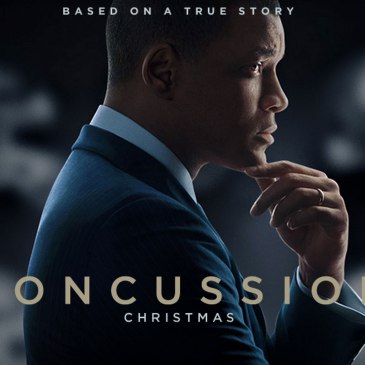
We saw the Martian last weekend. Good film, kind of improbable, but entertaining nonetheless. But this isn’t about that, it’s about the preview for an upcoming Will Smith film, Concussion, in which he uses an accent, and, gathering from the way the preview was edited, the only actor in the piece.
In other words, Will Smith wants an Oscar.
[photo] |
 |
Am I the only one who is sickened by the near hourly reports on Lamar Odom’s condition? I have no ill will toward the man, but let’s be clear: he suffered a seizure after a four-day coke-Viagra-whore binge at a Las Vegas brothel.
And that’s daily news because … ?
[photo] |

 |
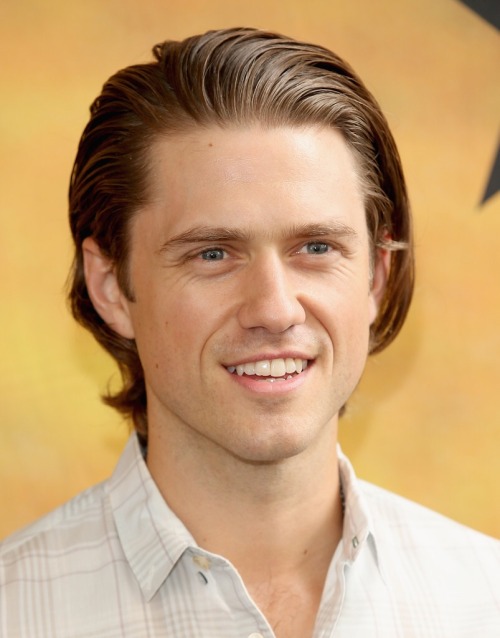
Aaron Tveit is on USA’s Graceland, a show I’ve never seen, though Aaron is quite the Eye Candy.
He was also in Les Miz, and played the role of Fiyero in Wicked, and since I am such a Wicked whore, which is quite different from being a wicked whore, I loved hearing him singing “Defying Gravity” from Wicked alongside current Elphaba, Rachel Tucker.
Dreamy and hot.
|



Monday, March 02, 2015
SC Christian College Bans Homosexuality ... Then Says It Didn't
 |
Last year, over at Erskine, a private college, a private Christian college, in Due West, South Carolina, two volleyball players, Drew Davis and Juan Varona, came out as gay. Take a minute to let that sink in … rural … South Carolina … Christian college … gay.

But still they came out, and it wasn’t easy, even though their team supported them. Drew Davis, left, was outed by an ex-boyfriend, then his father disowned him and his mother told him he'd be unemployed for the rest of his life; oh, and he attempted suicide. And now he faces a new policy at Erskine, enacted by the school’s new president, Dr. Paul Kooistra, which bans homosexuality as a "sin and contrary to the will of the Creator."
Can you actually “ban” homosexuality? I think not. But it seems that Dr. Kooistra will ban all homosexual students under his new policy.
The policy statement appears to threaten those students who fall outside the narrow view of Dr. Kooistra in a section where it states that "members of the Erskine community are expected to follow the teachings of scripture concerning matters of human sexuality and institutional decisions will be made in light of this position."
‘Institutional decisions will be made.’ That sounds like Kooistra plans to somehow punish, perhaps by expulsion, any gay students.

And Juan Varona, right, is fearful of what that means for LGBTQ students at Erskine, saying "the school took several steps back instead of progressing towards a future where everyone can be treated as an equal."
During an interview with Outsports, Varona mentioned the Ten Commandments:
"I understand the religious stand on adultery, which is part of the Ten Commandments in the Bible, and that would apply to heterosexual and homosexual people."
And, well, Cyd Zeigler, of Outsports, took that a step further with his own question:
“It's insightful that Varona would mention the Ten Commandments. There's another Commandment among the 10 that's given higher priority in all versions of the Bible: ‘Remember the Sabbath day, to keep it holy.’ We're assuming this means that Erskine College will also ban all of its athletic teams from practicing or competing on Sundays. That's unfortunate, because on Sunday, April 19, the men's volleyball, men's golf and women's golf teams have tournament games scheduled. The following Sunday four teams - softball, women's lacrosse, women's tennis and men's tennis - have matches scheduled. For the school to ban homosexuality but not ban these competitions on the Sabbath would be the highest form of hypocrisy.”
Hmmmm ….
Of course, with the media attention on the banning of homosexuality at Erskine, the school is now on the offensive … rather than just being offensive … by suggesting the media didn't understand the "context" of its statement, and stressing that since it posted the statement it has not banned – or expelled – any gay people.
In fact, after the story broke, as bigots and homophobes do, the school actually moved the anti-LGBT policy statement on its website and in its place posted a PDF of its newsletter, including its response to the media, titled, "Context for Erskine’s Statement on Human Sexuality." This new ‘context’ statement says its ban on homosexuality describes the college's ‘position,’ not its ‘policy’:
"No students have been asked to leave Erskine based on this statement."
The statement then goes on to brag that "Erskine does not discriminate against any protected categories of individuals in the administration of its policies, programs, or activities."
Sure they can say that, because in South Carolina, there are no protections for LGBT people.
So they haven’t really changed anything at all, they’ve just swept it into a nice pile in the corner where they can still get to it, but hope that no one sees it.
|
Thursday, July 24, 2014
Random Musings
 |
I’ve got several things to rant about so I decided it break it up with a triple dose of eye candy because, well, it’s my blog, dammit!
I am so tired of those so-called religious leaders, the so-called “Christians” saying that any kind of law or executive or marriage ban struck down is discrimination against people of faith.
It’s not; it’s anti-discrimination, and if people of faith still wanna hate the gays, please go right ahead and do so. But know that the time for passing laws against me simply because of whom I love is over.
|
 |
So, I’ve been watching Power on Starz; it’s about a drug lord trying to go straight and stars the delicious Omari Hardwick … hee hee ... hardwick. But this week I began noticing the club manager, Kantos, played by the oh-so-delicious Adam Huss.
Eye.Candy.
|
 |
Some fabulous news? Neil Patrick Harris just might appear on next season’s American Horror Story: Freak Show. Do not play with me Ryan Murphy; I want some NPH in my AHS!
The WTF news? Glee star Lea Michele has been lobbying to be a part of American Horror Story for a few years now. Do not play with me Ryan Murphy; I do not want Lea in my AHS!
 |
 |
Rick Santorum has said he might run for President in 2016 … Michele Bachmann has said she might run in 2016 … Rick Perry is posturing like he wants in the race, too.
Man, that is gonna be one tight squeeze in the GOP clown car.
|
 |
Also on the Man Candy Tube is a new show called Rush about a brilliant doctor who has personality issues and maybe a wee bit of a drug problem. Think House on coke.
But it does star the delicious … I seem to use that word a lot … Welsh actor Tom Ellis, all smoldering eyes and luscious lips.
Just sayin’.
|
 |
Back to a rant ….
CBS has announced that on the next, and thankfully final, season of Two And a Half Men, stars Ashton Kutcher and Jon Cryer will get married so that they can adopt a child together.
Apparently Kutcher's character will have a health scare that leads to a search for meaning and results in a desire to have a child of his own. But since it’s oh so hard to adopt a child as a single straight man he opts to fake-marry his roommate played by Cryer.
Note to CBS: this has already been done, badly, in I Now Pronounce You Chuck and Larry. Plus, it offends me that you make a mockery of the LGBT struggle to both legally marry and legally adopt a child.
Here’s a thought you may have never had: howsabout a show about a gay couple and their adopting a child? Failing that, cancel that ridiculous show already.
|
 |
Last, but oh so definitely not least, we have Satisfaction, on the USA network following Rush. It’s the story of a married man who, upon finding out his wife is having sex with an escort, becomes an escort himself.
Yeah, farfetched, but the husband is played by the delicious … there’s that word again … Aussie actor Matt Passmore.
Beefy dirty blond.
|
 |
Good news and a rant?
Okay … according to a recently published AMA study, over the last decade new HIV infections have dropped by over 30%; a decline seen in all demographics except young gay and bisexual men.
Seriously? The gay community has been decimated by HIV/AIDS and some of us still haven’t learned about protection?
|
 |
When I first heard this story — that the New York Giants had hired former player David Tyree — I thought, Who cares?
Oh, I knew he was a big anti-marriage equality foe. In the summer of 2011, Tyree claimed that if New York passed same-sex marriage, it would "be the beginning of our country’s sliding toward, you know, it’s a strong word, but anarchy." He also said, “two men will never be able to show a woman how to be a woman" — whatever that means — and then tossed this one on the fire:
“How can marriage be marriage for thousands of years and now all the sudden because a minority, an influential minority, has a push or an agenda and totally reshapes something that was not founded in our country, not founded by man, something that’s holy or sacred?”
Well, people were outraged that the Giants hired him and, as I said, I thought, Who cares? I mean, do we really want every single person on the planet who is against same-sex marriage or LGBT rights to be denied employment? I’m not; I don’t mind people having different points of view, just don’t use yours to legislate against me. But then …. I heard that Tyree will be the Giants’ new Director of Player Development, a position described by Giants Coach Tom Coughlin as such:
“Player engagement has become extremely important in any franchise,” Coughlin said. “It is the working relationship with the players to aid them in their continuing education, their development as young men, the opportunities in the business world and in networking in the city that they happen to be playing in. It is there to help instruct them, make them aware of the issues and the problems that exist out in the community and the world to try to keep them focused on their job and not fall into trouble."
In other words, Tyree, an anti-gay marriage activist and born-again Christian will serve as a mentor to new NFL Giants players. Now, I’m pissed off!
|
 |
Colorado … and the march goes on.
On a personal level, here in South Carolina, last September Katherine Bradacs and Tracie Goodwin filed a federal lawsuit challenging the South Carolina Defense of Marriage Law and a 2006 Amendment to the State Constitution that expressly banned same-sex marriages—see my original post HERE. Two attorneys — Carrie Warner and John Nichols—are donating their time and efforts to represent these women because they believe in the equality of all South Carolina citizens under the law and that we should value people who want to live in a committed relationships regardless of gender.
The Further-Round-The-Way-Gays, David and Neal, and Carlos and I, have been invited to attend a meeting next week with these two women and the lawyers to discuss possible ways to support the effort and bring marriage equality to South Carolina.
Yes, I said South Carolina.
 |
