

Showing posts with label Labor Day. Show all posts
Showing posts with label Labor Day. Show all posts
Monday, September 01, 2025


Monday, September 02, 2024

Monday, September 04, 2023

Monday, September 05, 2022

Monday, September 07, 2020

Monday, September 02, 2019

Monday, September 03, 2018

Monday, September 04, 2017

Monday, September 05, 2016
Happy Labor Day
 |
| And since I won't be laboring, or belaboring my point, I am taking a Blog Holiday today. I'll belabor tomorrow .... |
Monday, September 07, 2015

Monday, September 01, 2014

Monday, September 02, 2013
Happy Labor Day
Since I labor, I'm taking the day off .... Happy Labor Day, y'all!

The History of Labor Day
How it Came About .... What it Means
Labor Day, the first Monday in September, is a creation of the labor movement and is dedicated to the social and economic achievements of American workers. It constitutes a yearly national tribute to the contributions workers have made to the strength, prosperity, and well-being of our country.
Labor Day Legislation
Through the years the nation gave increasing emphasis to Labor Day. The first governmental recognition came through municipal ordinances passed during 1885 and 1886. From these, a movement developed to secure state legislation. The first state bill was introduced into the New York legislature, but the first to become law was passed by Oregon on February 21, 1887. During the year four more states — Colorado, Massachusetts, New Jersey, and New York — created the Labor Day holiday by legislative enactment. By the end of the decade Connecticut, Nebraska, and Pennsylvania had followed suit. By 1894, 23 other states had adopted the holiday in honor of workers, and on June 28 of that year, Congress passed an act making the first Monday in September of each year a legal holiday in the District of Columbia and the territories.
Founder of Labor Day
More than 100 years after the first Labor Day observance, there is still some doubt as to who first proposed the holiday for workers.
Some records show that Peter J. McGuire, general secretary of the Brotherhood of Carpenters and Joiners and a cofounder of the American Federation of Labor, was first in suggesting a day to honor those "who from rude nature have delved and carved all the grandeur we behold."
But Peter McGuire's place in Labor Day history has not gone unchallenged. Many believe that Matthew Maguire, a machinist, not Peter McGuire, founded the holiday. Recent research seems to support the contention that Matthew Maguire, later the secretary of Local 344 of the International Association of Machinists in Paterson, N.J., proposed the holiday in 1882 while serving as secretary of the Central Labor Union in New York. What is clear is that the Central Labor Union adopted a Labor Day proposal and appointed a committee to plan a demonstration and picnic.
The First Labor Day
The first Labor Day holiday was celebrated on Tuesday, September 5, 1882, in New York City, in accordance with the plans of the Central Labor Union. The Central Labor Union held its second Labor Day holiday just a year later, on September 5, 1883.
In 1884 the first Monday in September was selected as the holiday, as originally proposed, and the Central Labor Union urged similar organizations in other cities to follow the example of New York and celebrate a "workingmen's holiday" on that date. The idea spread with the growth of labor organizations, and in 1885 Labor Day was celebrated in many industrial centers of the country.
A Nationwide Holiday
The form that the observance and celebration of Labor Day should take was outlined in the first proposal of the holiday — a street parade to exhibit to the public "the strength and esprit de corps of the trade and labor organizations" of the community, followed by a festival for the recreation and amusement of the workers and their families. This became the pattern for the celebrations of Labor Day. Speeches by prominent men and women were introduced later, as more emphasis was placed upon the economic and civic significance of the holiday. Still later, by a resolution of the American Federation of Labor convention of 1909, the Sunday preceding Labor Day was adopted as Labor Sunday and dedicated to the spiritual and educational aspects of the labor movement.
The character of the Labor Day celebration has undergone a change in recent years, especially in large industrial centers where mass displays and huge parades have proved a problem. This change, however, is more a shift in emphasis and medium of expression. Labor Day addresses by leading union officials, industrialists, educators, clerics and government officials are given wide coverage in newspapers, radio, and television.
The vital force of labor added materially to the highest standard of living and the greatest production the world has ever known and has brought us closer to the realization of our traditional ideals of economic and political democracy. It is appropriate, therefore, that the nation pay tribute on Labor Day to the creator of so much of the nation's strength, freedom, and leadership — the American worker.
Sunday, October 28, 2012
Lyin' Ryan Offers Candy Instead Of Answers ....
There are lots of folks, even some gay ones, who find Paul Ryan attractive.
I am not one of those folks.
I don't find lying attractive. I don';t find bigotry appealing.
I don't see homophobia as a positive character trait.
And I especially don't understand why Paul Ryan, an elected official who works for the people of his state, offers a man candy--or a football schedule--when the man has questions about his "jobs" plan.
This is now what we need a heartbeat away from the presidency.
Fake smiles and "Have a nice day"?
Seriously.
Pardon my French, but fuck you Paul Ryan.
I am not one of those folks.
I don't find lying attractive. I don';t find bigotry appealing.
I don't see homophobia as a positive character trait.
And I especially don't understand why Paul Ryan, an elected official who works for the people of his state, offers a man candy--or a football schedule--when the man has questions about his "jobs" plan.
This is now what we need a heartbeat away from the presidency.
Fake smiles and "Have a nice day"?
Seriously.
Pardon my French, but fuck you Paul Ryan.
Monday, September 03, 2012
Labor Day: Thirteen Strange Buildings
1. The Crooked House: Sopot, Poland
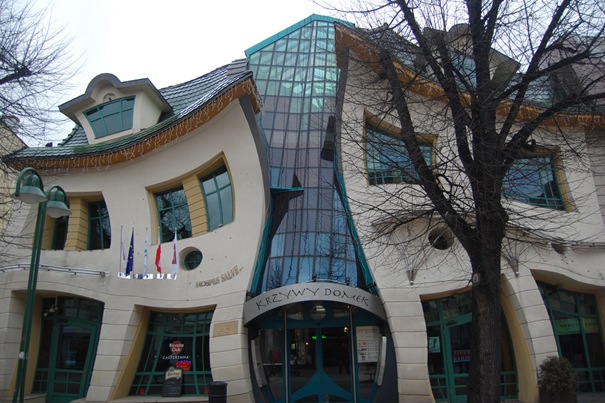
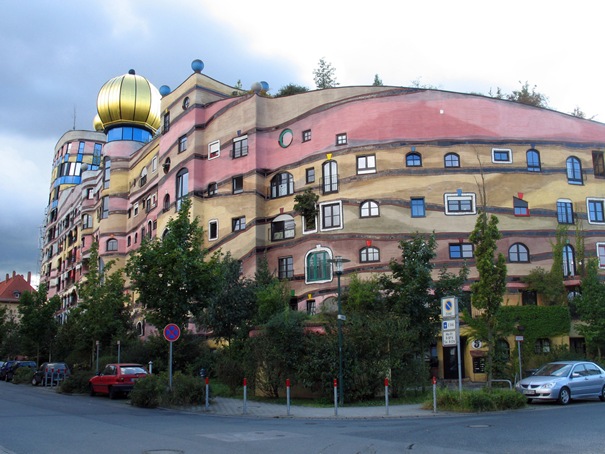 Image via: Kikos Dad
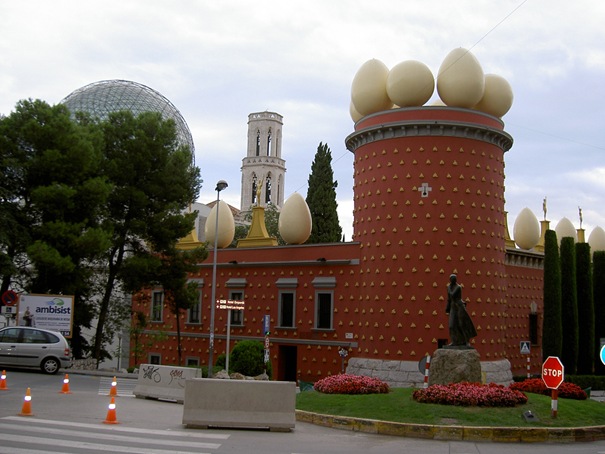
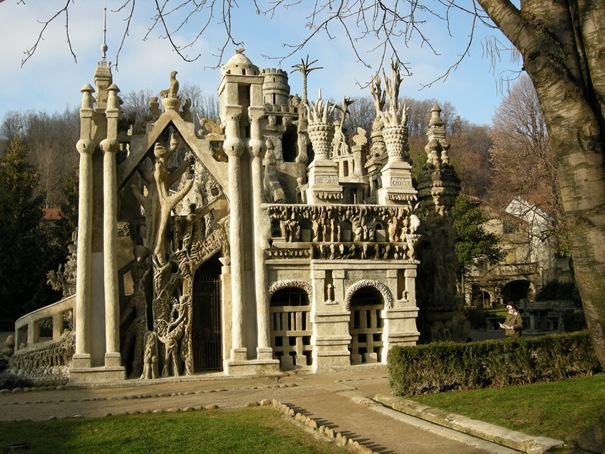 Image via: Mélisande*
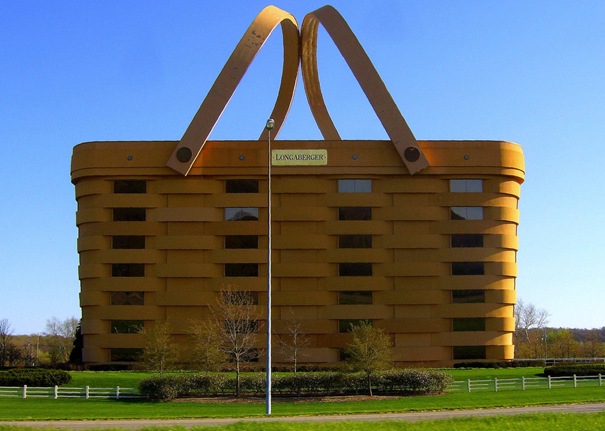
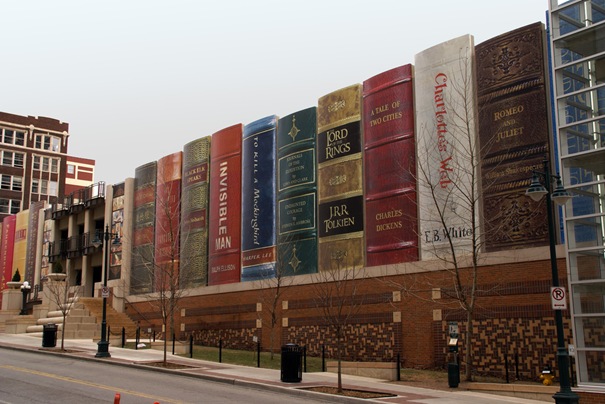 Image via: jonathan_moreau
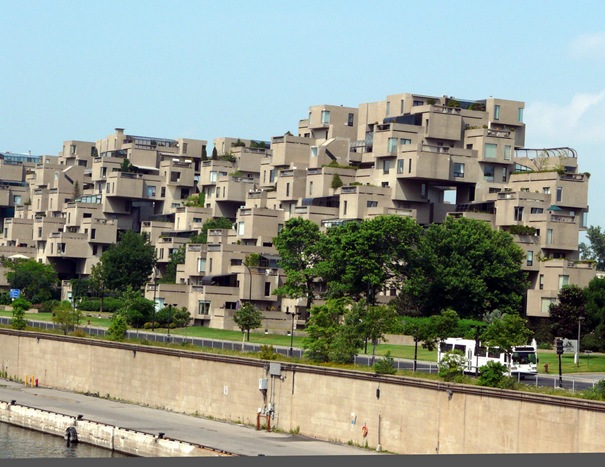 Image via: ken ratcliff
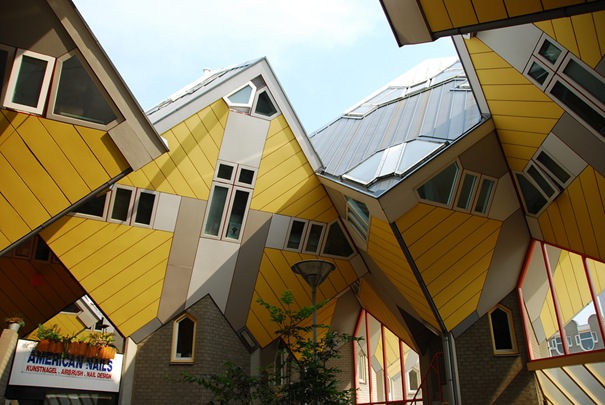 Image via: vpzone
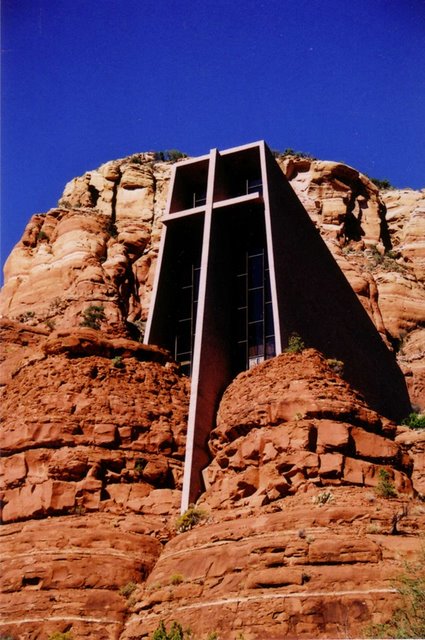 Image via: santanartist
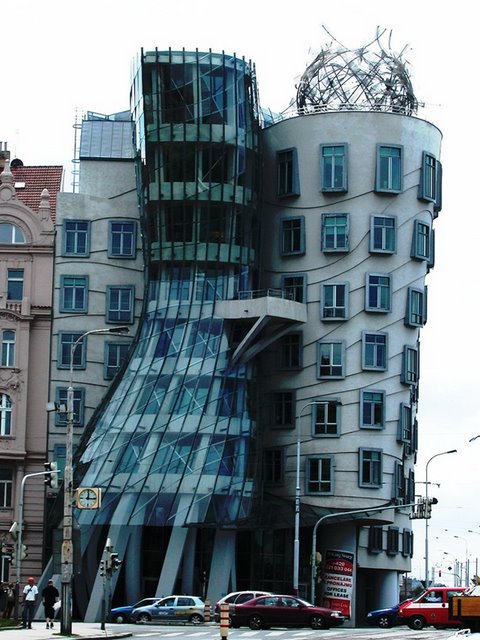
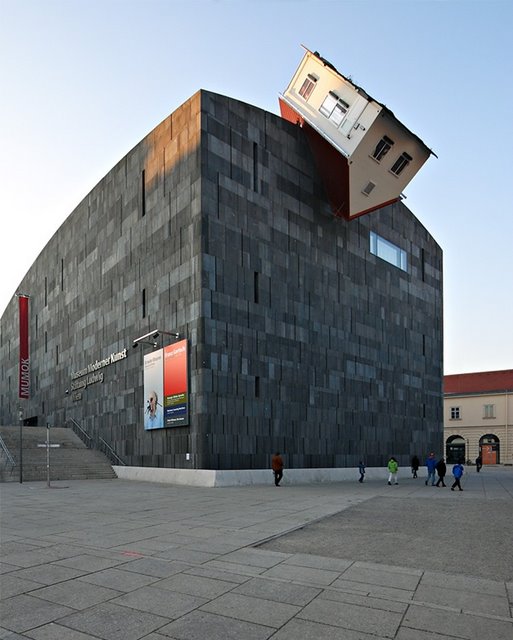
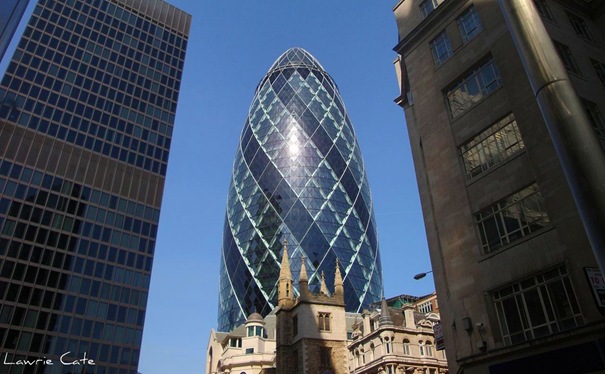 Image via: Lawrie Cate
 source
Construction of the building started in in January 2003 and in December 2003 it was finished. House architecture is based on Jan Marcin Szancer (famous Polish artist and child books illustrator) and Per Dahlberg (Swedish painter living in Sopot) pictures and paintings.
2. Hundertwasser Building: Darmstadt, Germany
The Hundertwasser house “Waldspirale”--”Forest Spiral”--was built in Darmstadt between 1998 and 2000. Friedensreich Hundertwasser, the famous Austrian architect and painter, is widely renowned for his revolutionary, colourful architectural designs which incorporate irregular, organic forms. This structure with 105 apartments wraps around a landscaped courtyard with a running stream. Up in the turret at the southeast corner, is a restaurant and bar.
 Image via: Kikos Dad
3. The Torre Galatea Figueras: Spain
The museum houses the largest collection of Salvador Dali works – paintings, sculptures, collages, mechanical devices and other curiosities, as well as a small selection of works by other artists Dali liked.
4. Ferdinand Cheval Palace: France
Le Palais Ideal is one of the most popular examples of naive art architecture, built by Ferdinand Cheval, a French Postman, over a period of 33 years. Cheval began building this in April 1879 and, while on the job, he tripped over a stone and was impressed by its unusual shape.
Inspired by the stone, he returned the following day and started gathering more rocks and putting them in his pockets.
With no architectural skills whatsoever, Cheval managed to build his Ideal Palace, combining several styles and using the Bible and Hingu mythology as inspiration. He spent 20 years on the outer walls alone, binding the stones together with lime, mortar and cement and decorating them with all sorts of chapel and temple models. His palace is recognized as a masterpiece and is now a cultural landmark and one of France’s popular tourist attractions.
 Image via: Mélisande*
5. The Basket Building: Ohio
The Longaberger Basket Company building in Newark, Ohio might just be a strangest office building in the world. The 180,000-square-foot building, a replica of the company’s famous market basket, cost $30 million and took two years to complete. Many experts tried to persuade Dave Longaberger to alter his plans, but he wanted an exact replica of the real thing.
6. Kansas City Public Library: Missouri
This project, located in the heart of Kansas City, represents one of the pioneer projects behind the revitalization of downtown. The people of Kansas City were asked to help pick highly influential books that represent Kansas City. Those titles were included as ‘bookbindings’ in the innovative design of the parking garage exterior, to inspire people to utilize the downtown Central Library.
 Image via: jonathan_moreau
7. Habitat 67: Montreal
Expo 67, one of the world’s largest universal expositions was held in Montreal. Housing was one of the main themes of Expo 67. The cube is the base, the mean and the finality of Habitat 67. In its material sense, the cube is a symbol of stability. As for its mystic meaning, the cube is symbol of wisdom, truth, moral perfection, at the origin itself of our civilization. 354 cubes of a magnificent grey-beige build up one on the other to form 146 residences nestled between sky and earth, between city and river, between greenery and light.
 Image via: ken ratcliff
8. Cubic Houses: Rotterdam, Netherlands
The original idea of these cubic houses came about in the 1970s. Piet Blom has developed a couple of these cubic houses that were built in Helmond. The city of Rotterdam asked him to design housing on top of a pedestrian bridge and he decided to use the cubic houses idea. The concept behind these houses is that he tries to create a forest by each cube representing an abstract tree; therefore the whole village becomes a forest.
 Image via: vpzone
9. Chapel in the Rock: Arizona
The unique architecture and location of the Chapel of the Holy Cross are the inspirations of Marguerite Bruswig Staude, who, on a trip to New York City in 1932, observed that a cross could be seen in the newly constructed Empire State Building when viewed from a certain angle; she was inspired to built a church based on that design.
Staude kept an eye out all over Europe and the USA for the ideal location, and she was especially struck by the beauty of Sedona. She decided to build her chapel here, which would be "a monument to faith, but a spiritual fortress so charged with God, that it spurs man's spirit godward." The Chapel of the Holy Cross was completed in April 1956.
 Image via: santanartist
10. Dancing Building: Prague
The Dancing House, aka Ginger & Fred, is the nickname given to the Nationale-Nederlanden building in Prague, Czech Republic at Rašínovo nábřeží. It was designed by Croatian-Czech architect Vlado Milunić in co-operation with renowned Canadian-American architect Frank Gehry on a vacant riverfront plot. The very non-traditional design was controversial at the time because the house stands out among the Baroque, Gothic and Art Nouveau buildings for which Prague is famous and it doesn't accord well with these architectural styles. Gehry originally named the house as Fred and Ginger--after famous dancers Fred Astaire and Ginger Rogers--because the house resembles a pair of dancers. The nickname is now very rarely used; moreover, Gehry himself was later "afraid to import American Hollywoodkitsch to Prague", so he refused his own idea.
11. Erwin Wurm: House Attack: Viena, Austria
Due to the ‘House Attack’ by famous Austrian sculptor Erwin Wurm the Vienna Museum of Modern Art (MUMOK) got into the list of the strangest buildings in the world. It seems like the house fell from the sky and landed in the center of the Austrian capital dashing right into the building of MUMOK. A little house, hanging upside down on its roof, attracted a lot of tourists’ attention all over the world in the end of 2006, when it was specially installed for Erwin Wurm’s exhibition taking place in the museum.
12. Gherkin Building: London
30 St Mary Axe, formally the Swiss Re building, and informally the Gherkin Building, is a skyscraper in London's financial district. With 41 floors, the tower is 591 ft tall, and stands on the site of the former Baltic Exchange, which was extensively damaged in 1992 by the explosion of a bomb placed by the Provisional IRA. After the plans to build the Millennium Tower were dropped, 30 St Mary Axe was designed by Norman Foster and Arup engineers, and was erected by Skanska in 2001–2003. The building has become an iconic symbol of London and is one of the city's most widely recognised examples of modern architecture.
 Image via: Lawrie Cate
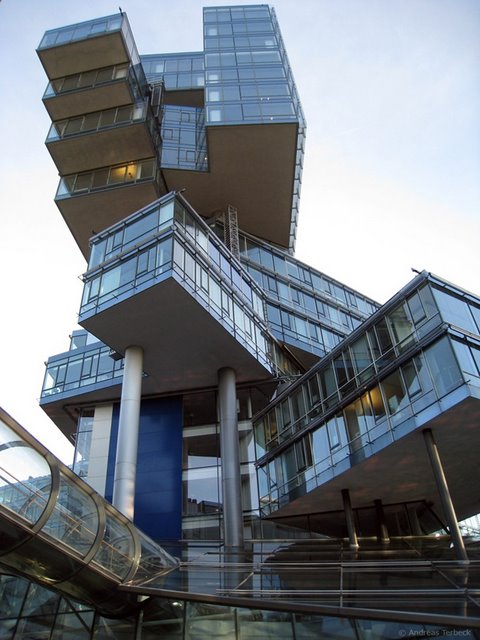
13. Nord LB building: Hannover, Germany
Behnisch, Behnisch & Partner's futuristic headquarters for the German bank Nord/LB has only recently been completed and is still baffling the neighbours. Essentially lots of glass and steel boxes stacked on top of each other, the building was designed to house the company's 1,500 Hanover staff in a comfortable and eco-friendly environment, reducing carbon dioxide emissions and optimising the use of natural daylight. Highlights include a staff restaurant with a roof in the shape of butterfly wings and a 20m tower made from material that changes colour according to the position of the sun.
Labor Day: The World's Ten Coolest Subways

In urban life, the subway is synonymous with the spirit of the city. It frees the city dweller from the automobile, it moves from point to point with speed while capturing the curiosity of its passenger. From Moscow to Montreal, Paris to Pyongyang, these 10 transit systems house truly stunning subway stations across all aspects of design. So grab your transit card and head underground– get ready to explore the 10 coolest subway systems in the modern world.
The Washington Metro

We contend that the Washington Metro is the most iconic and visually progressive subway system in the United States. First built in 1976, this 100-mile network of tunnels includes 28 stations, most of which are the work of architect Harry Weese. These massive, concrete caverns feature an egg carton texture that stretches from one side to the other in a split cylinder design. The walls are out of reach, there are no thick pillars breaking up the view and the whole expanse is awash in indirect light. These features are as much as aspect of design as they are safety, as the Washington Metro subway stations provide few if any dark crannies in which crime can hide. First time riders will also be amazed at the sheer depth of these Metro stations. Some stations reach down 200 feet below the surface, providing for one heck of a long, slow ride into the caverns below.


The Moscow Metro Subway System

The world’s second most used subway system is also amongst its most beautiful. Nearly 7,000,000 people ride the Moscow Metro Subway each day, zipping through 190 miles of tunnels that stretch as low as 276-feet below the surface. While some of its stations are nondescript, others are magnificent, ornate works of classically-influenced design. Take for example the Komsomolskaya Metro Station in Moscow, shown above. This gem of underground architecture was built in the 1930s and remains one of the world’s most lasting, most beautiful subway stations.


The Taipei Metro Subway System

Nearly 2,000,000 passengers ride the Taipei Metro subway system every day, cruising at speeds of up to 56mph across Taiwan’s capitol city. The clean and vibrant design of Taipei Metro’s stations has attracted many riders to the subway, a movement which has helped curb traffic congestion and spark urban renewal. Glass and light art cover the ceiling and columns of the station above, while fine art grace the walls of others. Is it a subway station, or is it an art gallery? More cities across the world should ask subway riders the same question.


The Paris Metro

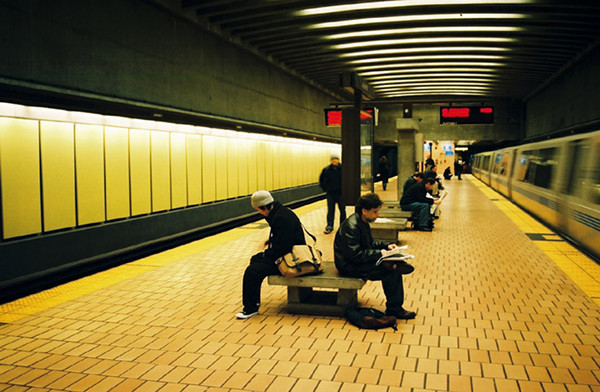
When it comes to old world subway stations, this is as old world as it gets. The Paris Metro subway system will turn 112 years old this year, its history reflecting Parisian pride with an Art Nouveau sense of style. The design character of its stations span the whole reach of classical to modern, separated by basic designs that are purely functional. The city of Paris has maintained the allure of many of the original stations that have an almost storybook character. But those of modern Paris reflect the city’s evolution of culture throughout the centuries.


Montreal Metropolitan

Another great French-speaking city is home to another great subway, the Montreal Metropolitan subway system. The Montreal Metro was born in 1966, in time for the world expo held the following year in this city. This was a vibrant time in Montreal, and the subway stations that dot this system reflect that vibrancy. Like the stations of the Moscow Metro and the Taipei Metro, this subway system is host to a collection of art galleries throughout its network. Public art ranging from fine to performance is welcomed here, far below the city it services. And with 1,100,000 riders a day, that makes it one of the most popular art galleries in the world. From the design of its subway stations to the culture it embraces, the Montreal Metro is high on our list for the world’s most beautiful subway systems.


Frankfurt U-Bahn Subway System

Since 1968, the Frankfurt U-Bahn subway system has served passengers traversing through Germany’s 5th largest city. Nearly have of the city’s population rides the U-Bahn every day, passing through 86 stations over 40 miles of track. Its stations are a wonder to experience, ranging from playful to progressive and everything in between. One features an entryway that looks like a runaway subway car has crashed through the surface. Another features symmetrical shapes that feels almost otherworldly. While Germany itself has its fair share of attractive subway systems, Frankfurt’s U-Bahn may be the country’s pearl.


Pyongyang Metro

Yes, that Pyongyang. This short, busy and out-dated subway system might be the world’s most mysterious. Rarely seen by eyes foreign to North Korea, the Pyongyang Metro subway system stretches across 14 miles and 17 stations. Despite its relatively short length, it serves even more daily travelers than Frankfurt’s U-Bahn. Its design hasn’t likely changed much since it was first revealed back in 1969. For a country as troubled as this one, a lack of change doesn’t come as a surprise. Still, it must be wild to travel on this subway as a westerner. Not only would it feel like walking into a different country, but a decade long since passed.


Kazakhstan’s Almaty Subway

After 23 years in construction, punctuated by a very long break, Kazakhstan’s Almaty Subway opened its doors on December 1st, 2011. The world’s youngest subway is immediately amongst the world’s most beautiful, featuring a design character that is at once modern and classical. Stained glass windows, geometric paint patterns, glossy floors and ornate chandeliers make this subway system a destination in its own right.


NYC’s Abandoned City Hall Subway Station

You could have ridden the Metra a thousand times and completely missed this station. NYC’s Abandoned City Hall Subway Station is closed to the public, accessible only during a very rare tour or an illegal entry. It was first closed in 1945, opened just once for public viewing since. It is a rare glimpse back to the early days of New York’s subway system, a look at turn-of-the-century design in the greatest of American cities.


Stockholm Subway
The Stockholm Subway may be the most beautiful subway system in the world. It features over 100 stations, some above ground and others below, and has been called the “longest art gallery in the world”. The blue line subway stations feature exposed bedrock as part of the design, giving a natural appeal to the otherwise modern designs. With carefully placed lights and stylish paint jobs, the stations are absolutely stunning to the eyes, reflecting a world class design sensibility that should make the people of Sweden proud. Upon a visit to Stockholm, the subway isn’t just a great way to get around, it’s also a must-see destination for travelers in Sweden.


Subscribe to:
Posts (Atom)