 |
I was doing some research for Black History Month, and was beginning to write something about Jackie Robinson. Then I happened to come across this piece about Robinson, written by Hank Aaron, HERE. Hank tells a better story:  I was 14 years old when I first saw Jackie Robinson. It was the spring of 1948, the year after Jackie changed my life by breaking baseball's color line. His team, the Brooklyn Dodgers, made a stop in my hometown of Mobile, Ala., while barnstorming its way north to start the season, and while he was there, Jackie spoke to a big crowd of black folks over on Davis Avenue. I think he talked about segregation, but I didn't hear a word that came out of his mouth. Jackie Robinson was such a hero to me that I couldn't do anything but gawk at him. They say certain people are bigger than life, but Jackie Robinson is the only man I've known who truly was. In 1947 life in America — at least my America, and Jackie's — was segregation. It was two worlds that were afraid of each other. There were separate schools for blacks and whites, separate restaurants, separate hotels, separate drinking fountains and separate baseball leagues. Life was unkind to black people who tried to bring those worlds together. It could be hateful. But Jackie Robinson, God bless him, was bigger than all of that. Jackie Robinson had to be bigger than life. He had to be bigger than the Brooklyn teammates who got up a petition to keep him off the ball club, bigger than the pitchers who threw at him or the base runners who dug their spikes into his shin, bigger than the bench jockeys who hollered for him to carry their bags and shine their shoes, bigger than the so-called fans who mocked him with mops on their heads and wrote him death threats. When Branch Rickey first met with Jackie about joining the Dodgers, he told him that for three years he would have to turn the other cheek and silently suffer all the vile things that would come his way. Believe me, it wasn't Jackie's nature to do that. He was a fighter, the proudest and most competitive person I've ever seen. This was a man who, as a lieutenant in the Army, risked a court-martial by refusing to sit in the back of a military bus. But when Rickey read to him from The Life of Christ, Jackie understood the wisdom and the necessity of forbearance. To this day, I don't know how he withstood the things he did without lashing back. I've been through a lot in my time, and I consider myself to be a patient man, but I know I couldn't have done what Jackie did. I don't think anybody else could have done it. Somehow, though, Jackie had the strength to suppress his instincts, to sacrifice his pride for his people's. It was an incredible act of selflessness that brought the races closer together than ever before and shaped the dreams of an entire generation. Before Jackie Robinson broke the color line, I wasn't permitted even to think about being a professional baseball player. I once mentioned something to my father about it, and he said, "Ain't no colored ballplayers." There were the Negro Leagues, of course, where the Dodgers discovered Jackie, but my mother, like most, would rather her son be a schoolteacher than a Negro Leaguer. All that changed when Jackie put on No. 42 and started stealing bases in a Brooklyn uniform. Jackie's character was much more important than his batting average, but it certainly helped that he was a great ballplayer, a .311 career hitter whose trademark was rattling pitchers and fielders with his daring base running. He wasn't the best Negro League talent at the time he was chosen, and baseball wasn't really his best sport — he had been a football and track star at UCLA — but he played the game with a ferocious creativity that gave the country a good idea of what it had been missing all those years. With Jackie in the infield, the Dodgers won six National League pennants. I believe every black person in America had a piece of those pennants. There's never been another ballplayer who touched people as Jackie did. The only comparable athlete, in my experience, was Joe Louis. The difference was that Louis competed against white men; Jackie competed with them as well. He was taking us over segregation's threshold into a new land whose scenery made every black person stop and stare in reverence. We were all with Jackie. We slid into every base that he swiped, ducked at every fastball that hurtled toward his head. The circulation of the Pittsburgh Courier, the leading black newspaper, increased by 100,000 when it began reporting on him regularly. All over the country, black preachers would call together their congregations just to pray for Jackie and urge them to demonstrate the same forbearance that he did. Later in his career, when the "Great Experiment" had proved to be successful and other black players had joined him, Jackie allowed his instincts to take over in issues of race. He began striking back and speaking out. And when Jackie Robinson spoke, every black player got the message. He made it clear to us that we weren't playing just for ourselves or for our teams; we were playing for our people. I don't think it's a coincidence that the black players of the late '50s and '60s — me, Roy Campanella, Monte Irvin, Willie Mays, Ernie Banks, Frank Robinson, Bob Gibson and others — dominated the National League. If we played as if we were on a mission, it was because Jackie Robinson had sent us out on one. Even after he retired in 1956 and was elected to the Hall of Fame in 1962, Jackie continued to chop along the path that was still a long way from being cleared. He campaigned for baseball to hire a black third-base coach, then a black manager. In 1969 he refused an invitation to play in an old-timers' game at Yankee Stadium to protest the lack of progress along those lines. One of the great players from my generation, Frank Robinson (who was related to Jackie only in spirit), finally became the first black manager, in 1975. Jackie was gone by then. His last public appearance was at the 1972 World Series, where he showed up with white hair, carrying a cane and going blind from diabetes. He died nine days later. Most of the black players from Jackie's day were at the funeral, but I was appalled by how few of the younger players showed up to pay him tribute. At the time, I was 41 home runs short of Babe Ruth's career record, and when Jackie died, I really felt that it was up to me to keep his dream alive. I was inspired to dedicate my home-run record to the same great cause to which Jackie dedicated his life. I'm still inspired by Jackie Robinson. Hardly a day goes by that I don't think of him. |

Showing posts with label Baseball. Show all posts
Showing posts with label Baseball. Show all posts
Wednesday, February 12, 2025
Repost: Black History Month: Jackie Robinson


Thursday, April 11, 2019
Bobservations
 |
The other day, for some reason, Carlos and I were discussing the fact that most straight men don’t give other straight men compliments for fear of looking ‘gay.’ And out of the blue, he says:
“As I always say, the hardest thing about a man wearing a kilt is that it exposes a man to his insecurities.” “As you always say?” “Yes, that’s what I always say.” “Seriously? We’re nineteen years into this thing and I have never heard that before.” “Well, I don’t say it to you.”
And then he sashays from the room singing …
♫ ♪ “You don’t know me …" ♪ ♫
There are times when that man is the funniest person ever!
|
 |
A man was hunting a rhinoceros in Kruger National Park, South Africa last week when he was trampled by the elephant, and his remains were devoured by a pride of lions.
Four other hunters were arrested, and they told the man’s family what happened. The relatives then called park officials, who started a search to recover his remains. A human skull and a pair of pants were recovered.
Karma is a bitch and this time she got it right.
|
 |
Okay, I’m a cynic … bite me … but this story chaps my hide.
It seems that Taylor Swift has donated $113,000 to the Tennessee Equality Project, a group that tries to stop state lawmakers from passing a series of anti-LGBTQ legislation.
Here’s the cynical part …Tennessee has been anti-LGBTQ forever and Swifty never ponied up cash, but suddenly, on the heels of Beyoncé getting an award from GLAAD suddenly Tay-Tay is an ally?
I think she wants a trophy and she can bite me.
|
 |
Kirstjen Nielsen resigned this week and folks are wondering what she’ll do next. I suggested we cage her and leave her at the border so she can get an exact idea of how vile a human being she is.
|
 |
Colorado Senator Vicki Marble gave an extraordinary speech outlining why she couldn't vote in favor of an 'Equal Pay Day' bill—a resolution urging government agencies to help close the pay gap for Colorado's women and minorities—saying she was concerned it was 'so focused against a white man':
"I just can't take part in something that is so focused against a white man because frankly I feel white men have done a lot for this country and this legislature. [And] not all white men make the same as every white man in a job."
Senator Marble explained that she was a single mother and had lived on "hot dogs and macaroni cheese" - but she doesn't feel cheated that she was paid less than men, er, white men, I’m guessing.
Siddown, you’re blocking the movement.
|
 |
Lori Loughlin and her husband Mossimo Giannulli were indicted this week for participating in the college admissions scam and were then hit with a new charge … conspiracy to commit money laundering, prosecutors said.
The move comes a day after the feds announced that 13 other parents arrested in the scandal—including actress Felicity Huffman—had agreed to take plea deals.
Of note is that under her plea deal Huffman gets a far lighter sentence—probation only, no jail time—than others who committed the same offense.
Yeah, that really shows that not only can money and privilege buy your way into college, it can also buy your way out of jail.
Well, maybe except for Loughlin. She may be going from Full House to Big House.
|
 |
Texas Rangers players Joey Gallo and Nomar Mazara introduced a new celebration handshake to Major League Baseball on Sunday, after Gallo sent both players in on a home run.
No more High Five, now it’s the Low Grab and Tug? Maybe I should be playing baseball?
|
 |
James Yates is a fitness model and an author of A Scrapbook of Conditioning Workouts, and clearly his workouts work.
He fills out briefs and wee swimsuits rather nicely.

He looks good wet.

He travels light.

He likes to skateboard, and I like to watch him skateboard.

Just sayin’.
|
 |
If you aren’t following playwright, novelist, screenwriter and essayist Paul Rudnick on Twitter, if only for his captioning of photos of the _____ Klan and its minions, why aren’t you?
They’re high-larious.
    |
Friday, April 17, 2015
Look! Up in the sky! It's a plane: A Gay Night At The Ball Park
 |
When I was a kid in California, we often went to Candlestick to watch the Giants play. And sometimes we went to the Oakland Coliseum to see the A’s play ball. And back then they had Hat Day, Shirt Day, Mitt Day, whatever day, but they never had an LGBT Pride Night.
Well, they do now, and apparently that has upset some fans who don’t wanna go to anything with the word ‘gay’ in it lest their secrets be revealed … they like the idea of pitchers and catchers, and men in tight uniforms smacking one another on the ass.
So, cue Oakland A's star pitcher Sean Doolittle and his girlfriend, Eireann — who has two moms — who have offered to buy the tickets from fans that object to attending LGBT Pride Night …
“If attending a baseball game on LGBT Pride Night makes you at all uncomfortable, it is probably a good idea to sell your tickets. And I have the perfect buyer. ME! If you'd like to sell your tickets to June 17th's LGBT Pride Night game, I will buy them from you at face value. As many as I can. No judgments. No questions asked. From there, I will donate any tickets I purchase to the Bay Area Youth Center's Our Space community for LGBTQ youth. That way you don't have to feel uncomfortable, and the seats don't go to waste. It's win-win. Please tweet at me (@EireannDolan) if you'd like to sell me your tickets. I'll purchase as many unwanted tickets as I can out of my own pocket. I also encourage other A's fans to do the same. Let's fill the stands that night! Love, Eireann and my hella gay moms."
The couple has also launched a GoFundMe account to fill the stadium and so far have raised over $16,000, causing the team to add three more sections of seating to LGBT Pride Night.
It’ll be a gay old time at the ball park. And money will go to a good cause.
Win-Win.
|
Tuesday, March 04, 2014
Matt Kaplon Comes Out
 |
It seems that every week sees more and more LGBT people opening up that closet door and stepping out; and it seems that many of these newly out are from the fields of professional sports, as well as college players.
We can count Matt Kaplon among the latter.
Kaplon, student and baseball player for Drew University, came out to his team and the world last weekend after being inspired by the coming out story of NCAA basketball player Derek Schell. Matt Kaplon credits Schell with saving his life and said of his own coming out:
“Everyone tells me that college is supposed to be the best four years of my life. I've had a great time, but for three and a half of them, I've been hiding things and not being the real me. Building friendships and meeting people and with my teammates, they know part of me but I finally feel like I want them to know everything. I want to be me 100% and make sure they know I'm not hiding anything. I'm ready for that. I'm ready to start not having to hide.”
Matt was welcomed by his team, and congratulated on coming out, and even his coach, Brian Hirschberg, was proud:
“He's as close to a family member as anyone I've ever coached. He's like a younger brother to me. When Matt shared his story with me, I respected him more, if that's even possible.”
So, welcome out Matt, and as our Coming Out gift to you, HOMO HQ will be sending you a copy of The Gay Agenda as well as the time-honored Official Coming Out Toaster Oven.
Welcome out, Matt, welcome out.
And, Thanks Coach.
|
via OutSports
Thursday, April 18, 2013
Random Musings
Boston, our hearts are with you, but after seeing this video, I get the feeling that you're gonna be just fine. See, at last night's Bruins game--the first since Monday--Rene Rancourt, who has been singing the National Anthem there for more than 40 years, began to sing, but stopped as the crowd took over.
Excuse me while I wipe away a tear.
TWEET OF THE WEEK:
Excuse me while I wipe away a tear.
 |
On the down-side of that, one Erik Rush, obvious wack-nut and FauxNews contributor, decided this was the Tweet he wanted to send out.
After many folks called him on his idiocy, Rush said he was being sarcastic.
Yes, in America, asking to 'kill them all' is considered sarcasm.
|
 |
You always hear people talk about America! land of the Free! Home of the Brave! The Good Old US of A! We're Number One!
And yet, on the face of it, at least in terms of marriage equality, we are so far behind the rest of the world. We usually lead the way, but on this issue we're sitting on our hands.
This week New Zealand became the 13th country in the world to legalize same-sex marriage when a bill to amend the current marriage law was approved by the country’s Parliament in its third and final reading.
Now, same-sex and transgender couples will be allowed to marriage in the NZ beginning in August, and same-sex couples who married overseas will also be able to have their marriage officially recognized in New Zealand. People watching from the public gallery immediately broke into singing a New Zealand anthem in the indigenous Maori language.
New Zealand becomes the first Asia-Pacific country to legalize marriage equality for same-sex couples and the effect on the transgender community is enormous; used to be, married transsexual people were forced to divorce when they change their gender, but they will no longer be required to do so.
New Zealand follows in the footsteps of Uruguay. who also voted to legalize same-sex marriage, making the South American country the third in the Americas to do so and the United States is still sitting on its hands.
|
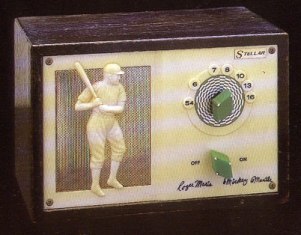 |
I am not a baseball nut, though I kinda follow it, a little, occasionally, some of the time. I like attending a game, though it's been a while--the last time was when we lived in Miami and went to a Marlins game.
But, there is something about hearing a baseball game on the radio that takes me back. I was driving along the other day, minding my own business, flipping through stations, when i came upon a game, and suddenly I was transported back to the Oakland Coliseum, watching a game with my family. I could smell the stadium, and the fans,m and feel the excitement in the air.
TV games don't do that for me, but somehow, hearing a game on the radio always takes me home. Plus, I was hungry for a Coliseum Colossus, a giant hot dog on a sour dough roll with mustard and sauerkraut.
Y-U-M.
|
 |
I heard a story this week about a police officer, Ron King of Port Canaveral Police Department in Florida, who was fired after it was learned that he was using a Trayvon Martin cut-out in target practice.
Yes, he decided to shoot at the photo of a murdered boy.
Only in America, but, hey, that's his right, I guess.
Just ask the cowards in the US Senate.
King has apologized to Trayvon's family for his asshattedness which he explains away as using the Trayvon target as a 'no-shoot' example.
How about not using the image of murdered people as targets Ron? That thought ever crossed your mind?
|
 |
'Memba when the GOP had their asses handed to them in November? they were all Mittsy's gonna win! Obama's finished!
And then they woke up. And they they talked about rebranding the party, changing their image, becoming more inclusive.
And, to that end, the Republican National Committee has unanimously voted to approve 12 resolutions, including one reaffirming the party's opposition to same-sex marriage.
The GOP. Some things never change, no matter how much they promise.
 |
 |
So, we have this faucet in the kitchen that is probably original to the house. And it's an odd little number. It has the actual tap right there where it should be, but the lever which one would use to turn the water on and off is situated on the far right corner of the sink[ separate from the actual faucet. Yes, the lever is not actually part of the faucet, but, hey, it worked, and we learned to live with it. Until ... one morning this past week Carlos muttered the phrase, We have a problem! The tap on the kitchen sink broke!
I said, We'll have to get it fixed.
I'm smart as a whip like that.
But Carlos said, We can just use these pliers to turn it on and off with, though.
And suddenly I'm in an episode of Green Acres, and my name is Lisa Douglas, and I'm wearing a marabou-trimmed negligee and climbing a telephone poll to make a phone call.
Not gonna happen.
Carlos, though, then suggest we call a handyman to install a new faucet, and I suggest that maybe we do it ourselves.
Carlos: Not unless you want a divorce!
Bob: What does that mean?
Carlos: I have two word for you: dining room lamp.
Bob: Um, that's three words, but I get your meaning.
I nearly killed Carlos when we put in the lamp over the dining table because the man never saw a book of instructions he wanted to read.
End of story, though: we bought a new faucet, and we installed it ourselves and no one was hurt during the process.
You can teach old gay dogs a new trick.
|
 |
We watched Total Recall with Colin Farrell the other night. Colin Farrell. Shirt off. Adorable. Shirt. Off.
Plus, it was more sci-fi and less stupid cartoon than the Schwarzenegger version.,
Plus, Colin Farrell, shirt off.
|
 |
Also back on is The Borgias, though after Jeremy irons idiotic comments about incestuous father-son relationships if marriage equality becomes law, I almost didn't watch.
But then I remembered ..... Francois Arnaud plays Cesare.
And I'm back in.
|
 |
Brittney Griner, the three-time All-America center at Baylor, and will soon be playing for the Phoenix Mercury, has come out as a lesbian:
"It really wasn't too difficult, I wouldn't say I was hiding or anything like that. I've always been open about who I am and my sexuality. So, it wasn't hard at all. If I can show that I'm out and I'm fine and everything's OK, then hopefully the younger generation will definitely feel the same way."
And she said this, about why there's a difference between acceptance of gays in men's versus women's sports:
"I really couldn't give an answer on why that's so different. Being one that's out, it's just being who you are. Again, like I said, just be who you are. Don't worry about what other people are going to say, because they're always going to say something, but, if you're just true to yourself, let that shine through. Don't hide who you really are."
Welcome out, Brittney, and please accept as our Coming Out gift, a copy of The Gay Agenda and the Official HOMO HQ Coming Out Toaster Oven.
Welcome out!
|
TWEET OF THE WEEK:

Tuesday, March 03, 2009
Mother$%#&er


Star Slugger, beauty shop boy, and asshat, Manny Ramirez has rejected yet another offer from the Los Angeles Dodgers. Ramirez' agents, Greedy McAsswipe, I mean, Scott Boras, has declined a $25 million, one-year contract with a $20 million player option for 2010.
$25,000,000.00 for one year.
$480, 679.00 a week.
$12, 000.00 an hour for a forty-hour week.
The offer is similar to the two-year, $45 million deal with a buyout or club option that the Dodgers put on the table in November. Ramirez refused the offer and the Dodgers withdrew their proposal. The team came back with a one-year, $25 million offer, but Ramirez turned that down as well. Ramirez also turned down salary arbitration.
That's a lot of braids, Manny. Asshat.
Wednesday, February 11, 2009
Jackie Robinson


I was doing some research for Black History Month, and was beginning to write something about Jackie Robinson. Then I happened to come across this piece about Robinson, written by Hank Aaron, HERE
Hank tells a better story:
Jackie Robinson
He thrilled fans, shattered baseball's color barrier and changed the face of the nation
By HENRY AARON
I was 14 years old when I first saw Jackie Robinson. It was the spring of 1948, the year after Jackie changed my life by breaking baseball's color line. His team, the Brooklyn Dodgers, made a stop in my hometown of Mobile, Ala., while barnstorming its way north to start the season, and while he was there, Jackie spoke to a big crowd of black folks over on Davis Avenue. I think he talked about segregation, but I didn't hear a word that came out of his mouth. Jackie Robinson was such a hero to me that I couldn't do anything but gawk at him.
They say certain people are bigger than life, but Jackie Robinson is the only man I've known who truly was. In 1947 life in America — at least my America, and Jackie's — was segregation. It was two worlds that were afraid of each other. There were separate schools for blacks and whites, separate restaurants, separate hotels, separate drinking fountains and separate baseball leagues. Life was unkind to black people who tried to bring those worlds together. It could be hateful. But Jackie Robinson, God bless him, was bigger than all of that.
Jackie Robinson had to be bigger than life. He had to be bigger than the Brooklyn teammates who got up a petition to keep him off the ball club, bigger than the pitchers who threw at him or the base runners who dug their spikes into his shin, bigger than the bench jockeys who hollered for him to carry their bags and shine their shoes, bigger than the so-called fans who mocked him with mops on their heads and wrote him death threats.
When Branch Rickey first met with Jackie about joining the Dodgers, he told him that for three years he would have to turn the other cheek and silently suffer all the vile things that would come his way. Believe me, it wasn't Jackie's nature to do that. He was a fighter, the proudest and most competitive person I've ever seen. This was a man who, as a lieutenant in the Army, risked a court-martial by refusing to sit in the back of a military bus. But when Rickey read to him from The Life of Christ, Jackie understood the wisdom and the necessity of forbearance.
To this day, I don't know how he withstood the things he did without lashing back. I've been through a lot in my time, and I consider myself to be a patient man, but I know I couldn't have done what Jackie did. I don't think anybody else could have done it. Somehow, though, Jackie had the strength to suppress his instincts, to sacrifice his pride for his people's. It was an incredible act of selflessness that brought the races closer together than ever before and shaped the dreams of an entire generation.
Before Jackie Robinson broke the color line, I wasn't permitted even to think about being a professional baseball player. I once mentioned something to my father about it, and he said, "Ain't no colored ballplayers." There were the Negro Leagues, of course, where the Dodgers discovered Jackie, but my mother, like most, would rather her son be a schoolteacher than a Negro Leaguer. All that changed when Jackie put on No. 42 and started stealing bases in a Brooklyn uniform.
Jackie's character was much more important than his batting average, but it certainly helped that he was a great ballplayer, a .311 career hitter whose trademark was rattling pitchers and fielders with his daring base running. He wasn't the best Negro League talent at the time he was chosen, and baseball wasn't really his best sport — he had been a football and track star at UCLA — but he played the game with a ferocious creativity that gave the country a good idea of what it had been missing all those years. With Jackie in the infield, the Dodgers won six National League pennants.
I believe every black person in America had a piece of those pennants. There's never been another ballplayer who touched people as Jackie did. The only comparable athlete, in my experience, was Joe Louis. The difference was that Louis competed against white men; Jackie competed with them as well. He was taking us over segregation's threshold into a new land whose scenery made every black person stop and stare in reverence. We were all with Jackie. We slid into every base that he swiped, ducked at every fastball that hurtled toward his head. The circulation of the Pittsburgh Courier, the leading black newspaper, increased by 100,000 when it began reporting on him regularly. All over the country, black preachers would call together their congregations just to pray for Jackie and urge them to demonstrate the same forbearance that he did.
Later in his career, when the "Great Experiment" had proved to be successful and other black players had joined him, Jackie allowed his instincts to take over in issues of race. He began striking back and speaking out. And when Jackie Robinson spoke, every black player got the message. He made it clear to us that we weren't playing just for ourselves or for our teams; we were playing for our people. I don't think it's a coincidence that the black players of the late '50s and '60s — me, Roy Campanella, Monte Irvin, Willie Mays, Ernie Banks, Frank Robinson, Bob Gibson and others — dominated the National League. If we played as if we were on a mission, it was because Jackie Robinson had sent us out on one.
Even after he retired in 1956 and was elected to the Hall of Fame in 1962, Jackie continued to chop along the path that was still a long way from being cleared. He campaigned for baseball to hire a black third-base coach, then a black manager. In 1969 he refused an invitation to play in an old-timers' game at Yankee Stadium to protest the lack of progress along those lines.
One of the great players from my generation, Frank Robinson (who was related to Jackie only in spirit), finally became the first black manager, in 1975. Jackie was gone by then. His last public appearance was at the 1972 World Series, where he showed up with white hair, carrying a cane and going blind from diabetes. He died nine days later.
Most of the black players from Jackie's day were at the funeral, but I was appalled by how few of the younger players showed up to pay him tribute. At the time, I was 41 home runs short of Babe Ruth's career record, and when Jackie died, I really felt that it was up to me to keep his dream alive. I was inspired to dedicate my home-run record to the same great cause to which Jackie dedicated his life. I'm still inspired by Jackie Robinson. Hardly a day goes by that I don't think of him.
Subscribe to:
Posts (Atom)