 |
 Years ago, in high school and later, in college, I wanted to be a history teacher. I have always been fascinated by history, and the fact that history repeats, especially where no lessons have been learned. But I wonder, how we can expect to learn anything from history when we aren’t, weren’t, and might not ever be, if the Republicans have their way, taught the full history of this country, the good, the bad, and the terribly ugly.  I took history classes in grade school, middle school, high school and many in college and not once, ever, did I hear the words ‘Tula Race Massacre.’ Not once. Oh, I learned about Frederick Douglass, Harriet Tubman, the Rev. Dr. Martin Luther King Jr., Rosa Parks and a few others, but I never heard of the Greenwood District in Tulsa, about Black Wall Street, about the murders of at least 300 Black Americans and destruction of what was, in fact, an entire thriving city. But I have learned that the reason for this is that our history is written, at least for school textbooks, mostly by white people, who, perhaps through no fault of their own, never heard of Black Wall Street either. I only learned of the Tulsa Race Massacre last year … and only because the twice-impeached, one-term loser wanted to hold one of his super-spreader rallies in Tulsa on the anniversary of the massacre. I have, however, since then, read much about the massacre, and have seen several documentaries this past week as the 100th anniversary came and went. And that makes me angry. I mean, I wasn’t brought up to think that I was better than anyone else, whether because I was male or white; I was brought up to believe we are all the same, even though we may look, love, or worship differently, or have different education or different socio-economic status. And I wonder if this stain on US history, which has gone silent in schools since it happened, I wonder that if it had been taught and discussed, would we have learned something new, changed our ways. Would we need a Black Lives Matter movement in 2021 if we knew what had happened to all those Black lives in 1921? And so, for anyone who doesn’t know about the Tulsa Race Massacre, let me tell you what I now know …  It began on May 31, 1921, when a Black teenager named Dick Rowland was working at a shoe-shine stand. His employer didn’t’ have a “colored” restroom, so Rowland walked down the block to the Drexel Building to take the elevator to the fourth floor and use the nearest “colored” bathroom. No one really knows what happened on that elevator—Rowland says it lurched and he bumped into the elevator operator—but at some point, the young white operator, Sarah Page, screamed and Rowland fled. The police were called, and Rowland was arrested the next morning for assault, code for rape. During the day, white men began to gather around the courthouse where Rowland was being held, looking to lynch the teenager. Their numbers grew and grew and around 9PM a group of 25 armed Black men—including World War I veterans—arrived at the courthouse to make sure Rowland wouldn’t be turned over to the mob. The sheriff assured them that the young man would be safe, and turned them away, but as the mob of angry white men grew to over 1,500, later that night some 75-armed Black men returned to the courthouse, where they were met by the white men, many of whom were also armed. The sheriff again tried to persuade the Black men to leave the jail, assuring them that he had the situation under control, but then a shot was fired, and all hell broke loose, leaving 10 White men and two Black men dead. The outnumbered group of Black men retreated to Greenwood and that was when the sheriff began to deputize those angry white men and provide them with firearms because there were rumors that Black people from neighboring towns were flooding into the city, but there is no evidence that this ever occurred. What did happen was that this growing mob of angry white men poured into Greenwood on the morning of June 1, 1921, looting and burning homes and businesses over 35 square blocks. Police and firefighters arrived on scene, but did nothing to help, allegedly because rioters had threatened them with guns and forced them to leave.  And it wasn’t just white men with guns and torches and gas cans attacking Greenwood, eyewitnesses tell of airplanes carrying White assailants, who fired rifles and dropped firebombs on buildings, homes, and fleeing families. Law enforcement officials later said that the planes were to provide reconnaissance and protect against a "Negro uprising" even though it has been said that many in law enforcement were aboard at least some flights that torched Greenwood.  By the end of the day, more than 1,256 Black-owned homes were burned to the ground, with another 215 looted. In the downtown area, the two Black-owned newspapers, a school, a library, a hospital, several churches, hotels, stores and many other businesses were also destroyed. By the end of the day, Governor J. B. A. Robertson called out the National Guard and declared martial law, but the riot had effectively ended. Though guardsmen helped put out fires, they also imprisoned many Black Tulsans, and by June 2 some 6,000 people, all Black, were under armed guard at the local fairgrounds. There were no convictions for any of the charges related to violence.  On June 3, 1921, over 1,000 businessmen and civic leaders met to form a committee to raise funds and aid in rebuilding Greenwood. Many Black families spent the winter of 1921–1922 in tents as they worked to rebuild. But then a group of influential White developers persuaded the city to pass a fire ordinance that would have prohibited many Black people from rebuilding in Greenwood. Their intention was to redevelop Greenwood for more business and industrial use and force Black Tulsans further to the edge of town. The case was litigated and appealed to the Oklahoma Supreme Court where it ruled unconstitutional but most of the promised funding was never raised for the Black residents, and they struggled to rebuild.  While the Oklahoma Bureau of Vital Statistics officially recorded 36 deaths, historians estimate the death toll may have been as high as 300. In 2001, the report of the Race Riot Commission—which has subsequently, more accurately, been renamed the Race Massacre Commission—concluded that between 100 and 300 people were killed and more than 10,000 people were left homeless over those 18 hours; property damage amounted to more than $1.5 million in real estate and $750,000 in personal property. And yet we were never told about this because … many survivors left Tulsa, and those who stayed, both Black and White, kept silent about the terror and violence for decades, and the massacre was largely omitted from local, state and national histories. And for decades, there were no public ceremonies, no memorials for the dead or any efforts to commemorate the events of May 31-June 1, 1921. Instead, there was a deliberate effort to cover them up.  The Tulsa Tribune removed its own May 31st front-page story of the assault on a white girl by a “negro” that sparked the chaos from its bound volumes, and both police and state militia archives about the riot have gone missing as well. Erased, Forgotten. Never taught in schools. A bill in the Oklahoma State Senate requiring that all Oklahoma high schools teach the Tulsa Race Massacre failed to pass in 2012, with its opponents claiming schools were already teaching their students about the riot. It was not recognized in the Tulsa Tribune feature of "Fifteen Years Ago Today" or "Twenty-five Years Ago Today" and every year, on the anniversary of the massacre, no mention was ever printed in the local papers. A 2017 report detailing the history of the Tulsa Fire Department from 1897 until 2017 makes no mention of the 1921 massacre.  In 1996, as the riot's 75th anniversary neared, the state legislature authorized an Oklahoma Commission to investigate the Tulsa Race Riot, by appointing individuals to prepare a report detailing an account of the riot. The commission had originally been called the "Tulsa Race Riot Commission", but in November 2018 the name was changed to "Tulsa Race Massacre Commission. A final report was delivered in February 2001, and recommended actions for substantial restitution to the Black residents, in the form of reparations to survivors and descendants of survivors; a scholarship fund available to students affected by the Tulsa race riot; establishment of an economic development zone in the Greenwood district; and a memorial for the reburial of the remains of the victims of the Tulsa race riot who had been placed in mass graves in a local cemetery and presumed to have been dumped into an area known as The Canes along the Arkansas River. Lastly, in the hours after the Tulsa Race Massacre, all charges against Dick Rowland were dropped, with authorities having concluded that Rowland had accidentally stumbled into Page. Dick Rowland left Tulsa after his release and never returned. It was all a misunderstanding that left many hundreds dead, many thousands homeless, and an entire city destroyed. Oh, and before I go, I should also point out that I was never taught about the Slocum massacre of Black residents in Texas by an all-white mob in 1910 or the Red Summer of white supremacist terrorism in 1919. How will we ever do better if we don’t learn from the past?  |

Friday, February 28, 2025
Black History: Tulsa Race Massacre: We Can't Fix Racism If We Don't Learn From it


Thursday, February 27, 2025
Repost: Black History Month: Rosa Parks
 |
Rosa Parks is one of my heroes. Ask anyone who knows me and they'll tell you that I would have loved to have known her; that she is an inspiration to me, to stand up....or sit down....when you want to make a change.  In one experience, Rosa's grandfather stood in front of their house with a shotgun while Ku Klux Klan members marched down the street. The city of Pine Level, Alabama had a new school building and bus transportation for white students while African American students walked to a one-room schoolhouse, often lacking desks and adequate school supplies. Rosa knew that, merely because of the color of her skin, she would not be treated equally. In 1929, while in the eleventh grade, Rosa left school to care for her sick grandmother in Pine Level. She never returned to school but instead got a job at a shirt factory in Montgomery. In 1932, she married a barber named Raymond Parks who was an active member of the NAACP and with his support, Rosa finished her high school degree in 1933 and she, herself, soon became actively involved in civil rights issues. Rosa Parks joined the Montgomery chapter of the NAACP in 1943, and served as the secretary to the president, E.D. Nixon until 1957. Now, in those days, not so very long ago, in Montgomery, Alabama, city code required that all public transportation be segregated, and that all bus drivers be given "powers of a police officer of the city while in actual charge of any bus for the purposes of carrying out the provisions" of the code. While operating a bus, drivers were required to provide "separate but equal"—there's that old chestnut again—accommodation for white and Black passengers by assigning seats. This was accomplished with a line, an actual sign, roughly in the middle of the bus separating white passengers in the front and African Americans in the back. But African Americans didn't just have to ride in the back. When they got on the bus, they would pay their fare, then get off the bus, walk to the back and board the bus again. No one wanted “colored” people walking in between the white people. If the seats in the front of the bus filled up, and more white passengers got on, the bus driver would simply move the sign back, separating Black and white passengers, and ask Black passengers to give up their seats so the whites could sit down. On December 1, 1955, after a long day working at the Montgomery Fair department store, Rosa Parks boarded the Cleveland Avenue bus for home. She got on, paid her fare, got off, walked to the back, got on again, and found a seat in the first of several rows designated for "colored" passengers. Though the city's bus ordinance did give drivers the authority to assign seats, it didn't specifically give them the authority to demand a passenger to give up a seat to anyone regardless of color. However, Montgomery bus drivers had adopted the custom of requiring Black passengers to give up their seats to white passengers when no other seats were available. If the Black passenger protested, the bus driver had the authority to refuse service and could call the police to have them removed. As the bus Rosa was riding continued on its route, it began to fill with white passengers. Eventually, the bus was full and the driver noticed that several white passengers were standing in the aisle. This apparently was unacceptable. He stopped the bus and moved the sign separating the two sections back one row and asked the four Black passengers in that row to give up their seats. Three complied, but Rosa refused. She stayed seated. The driver demanded, "Why don't you stand up?" Rosa replied, "I don't think I should have to stand up." Can I get a You Go, Girl. The driver called the police, who arrested Rosa at the scene and charged her with violation of Chapter 6, section 11 of the Montgomery City code. She was taken to police headquarters where later that night she was released on bail. On December 8, Rosa faced trial and in a thirty-minute hearing was found guilty of violating a local ordinance. She was fined ten dollars, plus a four-dollar court fee. The very evening she was arrested, E.D. Nixon, head of the local chapter of the NAACP, began to organize a boycott of Montgomery's city buses. Ads were placed in local papers and handbills were printed and distributed in Black neighborhoods. Members of the African American community were asked to stay off the buses Monday, December 5th in protest of Rosa's arrest. People were encouraged to stay home from work or school, take a cab or walk to work. With most of the African American community not riding the bus, organizers believed a longer boycott might be successful. On Monday, December 5, 1955, a group of African-American community leaders gathered at Mt. Zion Church to discuss strategies. They determined that the effort required a new organization and strong leadership. They formed the "Montgomery Improvement Association"--the MIA--and elected Montgomery newcomer Dr. Martin Luther King, as their first president. The boycott of December 5th was a success, and so it was continued. Some African-Americans carpooled; others rode in African American-operated cabs. But most of the estimated 40,000 African American commuters walked, some as far as 20 miles to get to work. Public buses sat idle for months, severely crippling the transit company's finances. But the boycott faced strong resistance, with some segregationists retaliating with violence. Black churches were burned and both Martin Luther King and E.D. Nixon's homes were attacked. Other attempts were made to end the boycott as well. The taxi system used by the African American community to help people get around had its insurance canceled. Other Black people were arrested for violating an old law prohibiting boycotts. See, the Black folks weren't allowed to protest, or have an opinion, or stay seated. But the African American community also took action. Under the Brown v. Board of Education decision that said "separate but equal" policies had no place in public education, a black legal team took the issue of segregation on public transit systems to federal court. In June of 1956, the court declared Alabama's racial segregation laws for public transit unconstitutional. The city appealed and on November 13, 1956, the Supreme Court upheld the lower court's ruling. With the transit company and downtown businesses suffering economic loss and the legal system ruling against them, the city of Montgomery had no choice but to lift the law requiring segregation on public buses. The combination of legal action, backed by the unrelenting determination of the African American community made the 382-day Montgomery Bus Boycott one of the largest and most successful mass movements against racial segregation in history. That's right, people. The boycott lasted over a year! Although she was now a symbol for the Civil Rights Movement, Rosa Parks suffered as a result. She lost her job at the department store and her husband lost his after his boss forbade him to discuss his wife or their legal case. They were unable to find work and eventually left Montgomery. Rosa Parks moved her family—her husband and mother—to Detroit, where she made a new life for herself, working as a secretary and receptionists in U.S. Representative John Conyer's congressional office. She also served on the board of the Planned Parenthood Federation of America. In 1987, at age seventy-four, Rosa Parks, along with life-long friend Elaine Eason Steele, founded the Rosa and Raymond Parks Institute for Self-Development. The institute runs the "Pathways to Freedom" bus tours, introducing young people to important civil rights and Underground Railroad sites throughout the country. In 1992, she published Rosa Parks: My Story, an autobiography recounting her life in the segregated South. In 1995, her memoirs, Quiet Strength, focused on the role religious faith played in her life. Rosa Parks received many accolades during her lifetime including the Spingarn Medal, the NAACP's highest award. She also received the Martin Luther King Jr. Award. On September 9, 1996, President Bill Clinton awarded Rosa Parks the Presidential Medal of Freedom, the highest honor given by the U.S. executive branch. The next year, she was awarded the Congressional Gold Medal, the highest award given by the U.S. legislative branch. In 1999, Time magazine named Rosa Parks one of the 20 most influential people of the twentieth century.  All of that because she wouldn't give up her seat. People used to say that Rosa wouldn't get up because she'd worked all day and was tired but she, herself, said she wasn't physically tired, she was just "tired of giving in." I know that feeling all too well. |
Wednesday, February 26, 2025
Repost: Black History Month: Emmett Till
 |
This one breaks my heart and feeds my anger.  On August 20, 1955, with his mother's warning ringing in his ears, and his deceased father's ring on his finger, Emmett Till set off with his cousin Curtis Jones on the train to Mississippi. When Till and Jones arrived on August 21, they stayed at the home of Till's great-uncle Mose Wright, just on the outskirts of Money, Mississippi. Three days later, the two boys drove Wright's car into the small town of Money and stopped at Bryant's Grocery store to buy some candy. Prior to going inside, Till pulled out some pictures of his white friends in Chicago and showed them to the local boys outside the store. Those boys dared Till to talk to Carolyn Bryant, the store clerk. Till went into the store, purchased some candy, and what happened as he was leaving is unclear. Till either said, "Bye, baby" or he whistled at Carolyn Bryant. Neither Emmett Till nor Curtis Jones understood the magnitude of Till's act, so they didn't tell Mose Wright what happened. They continued to think nothing of the event as three days passed without incident; three days of the cousins enjoying their summer vacation. However, on the fourth day, early Sunday morning, Carolyn Bryant's husband, Roy, and his half-brother, J.W. Milam, knocked on the door of Wright's home. With a pistol and flashlight in hand, they asked Mose Wright whether three boys from Chicago were staying with him. And , because when white people with guns knocked at your door in Mississippi in 1955, and you're a Black man, you let them in, Mose Wright took the two men to a room where Emmett Till was sleeping. Bryant and Milam told Till to get dressed. Wright unsuccessfully pleaded with them to just whip Till, but the two men ignored his pleas, and threatened to kill Wright if he told anyone. Several hours later, Mamie Till was notified of her son's kidnapping. A search of the area was conducted, and Mamie Till notified Chicago newspapers of her son's disappearance. Wright told Money's sheriff who had taken Till, and he arrested Bryant and Milam for kidnapping. Little more than a week after Emmett Till arrived in Money, Mississippi, his body was discovered in the Tallahatchie River. It was weighted down by a seventy-five-pound cotton gin fan, which was tied around Till's neck with barbed wire. His face was so mutilated that when Wright identified the body, he could only do so based on the ring that Till has been wearing—his dead father's ring. Mamie Till made the decision, when Emmett's body was returned to Chicago, to have an open casket funeral. She wanted the world to know what had happened to her son. His right eye was missing, his nose was broken, and there was a hole in the side of his head. Fifty-thousand people attended the funeral. Jet magazine ran photos of Till's body; soon Till's murder became an international story. Down in Money, Mississippi, Milam and Bryant garnered support; whites in their community claimed they were innocent and supported their defense by donating to 'the cause.' The trial began on September 19, 1955, in Sumner, Mississippi. The entire jury was composed of white men from the defendants' home county. At trial, the defense attorney asserted that the body recovered from the river was not Till's body, and instead, claimed Milam and Bryant had taken Till but had let him go. Milam and Bryant alleged that the NAACP and Mamie Till had dug up a body and claimed that it was Till and that Emmett Till was hiding out in Chicago. For the prosecution, finding witnesses was difficult for the prosecution. In the South, it was dangerous for Black people to testify against any white person, so those who knew anything were reluctant to come forward. However, white and Black reporters and the NAACP were able to find witnesses against the defendants. Barely whispering, out of fear of reprisal, Willie Reed testified on the stand that he had seen Roy Bryant, J.W. Milam, and another man with Till. Further, he testified that he heard screaming coming from the Milam barn. When Milam came out of the barn with a .45 on his hip, Milam asked Reed if he had seen anything, and Reed said no. Mose Wright had decided from the beginning that he was going to testify. When Wright took the stand, he testified that Milam and Bryant had taken Till at gunpoint from his home. After Reed and Wright testified, they were quickly escorted out of Mississippi by the NAACP. Mamie Till was forced to testify that the body she buried was her son, Emmett Till. Neither J.W. Milam nor Roy Bryant testified. The trial lasted five days. In the defense's closing argument, Milam and Bryant's attorney forewarned the jury about convicting the defendants: "Your ancestors will turn over in their grave, and I'm sure every last Anglo-Saxon one of you has the courage to free these men." The jury deliberated for only 67 minutes; a long time because, as one jury said, they'd taken a break to cool off with some soda pop. The jury found Milam and Bryant not guilty. They concluded that the prosecution had failed to prove that the body recovered from the river was Emmett Till. On January 24, 1956, Look magazine published the confession of Milam and Bryant, who had agreed to tell their story, sell their story for $4,000 since they had already been found not guilty and could not be tried again. According to their confession, they beat Till with a .45 in Milam's barn, and then proceeded to take him to the Tallahatchie River where they had him take off his clothes and then they shot him. A gin fan was tied around his neck with wire in order to weigh the body down in the river. They burned Till's clothes and shoes. Milam and Bryant were never charged with any other crimes relating to Till’s murder. After the trial, Black people boycotted the Bryant’s' store, which forced them out of business. Both Milam and Bryant remained in Mississippi until their deaths. J.W. Milam died of cancer in 1980, twenty-five years after he murdered Emmett Till. Roy Bryant died of cancer in 1994, thirty-nine years after he got away with murder. Carolyn Bryant Donham, the white woman whose accusation led to the 1955 lynching of Emmett Till died in 2023. Donham testified in 1955 that Emmett grabbed her hand and waist and propositioned her, saying he had been with “White women before” but in 2017, author Timothy Tyson revealed in his book The Blood of Emmett Till that Donham had recanted her testimony. Donham's family publicly denied that she had recanted but the fact is, were it not for her words that a young Black man either whistled at her or said “Bye, baby,” Emmett till would have never been murdered. Carolyn Bryant Donham died in 2023. |
Tuesday, February 25, 2025
Repost: Black History Month: Lorraine Hansberry


Monday, February 24, 2025
Repost: Black History Month: Icons
 |
African American abolitionist Harriet Tubman was born into slavery, but escaped to Philadelphia in 1849, and subsequently became one of the most successful “conductors” on the Underground Railroad.  During the Civil War, Tubman attached herself to the Union forces in coastal South Carolina, serving as a nurse, cook, laundress, scout, and spy, and in 1863 she played an important part in a raid that resulted in the freeing of more than 700 slaves.  A state representative until 1974, he then served as a state senator from 1975 until 1987. Bond led a group of Black delegates to the 1968 Democratic Convention where he challenged the party's unit rule and won representation at the expense of the regular Georgia delegation. In 1986 he lost a Georgia congressional race to John Lewis. In 1998 he became chairman of the National Association for the Advancement of Colored People. 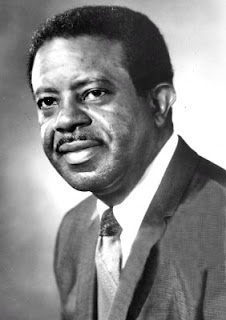 He was treasurer, vice president, and, after King's assassination in 1968, president of the Southern Christian Leadership Conference (SCLC). An advocate of nonviolence as a means to social change, he led the Poor People's Campaign on Washington, D.C., after King's death.  Anderson first sang in Philadelphia church choirs, then studied with Giuseppe Boghetti. She began her concert career in 1924 and achieved her first great successes in Europe. Her rich, wide-ranging voice was superbly suited to opera, lieder, and the spirituals that she included in her concerts and recordings. In 1939, when the Daughters of the American Revolution refused to allow her to perform at Constitution Hall in Washington, D.C., Eleanor Roosevelt resigned her DAR membership in protest and sponsored Anderson's concert at the Lincoln Memorial. In 1955 Anderson made her debut with the Metropolitan Opera. She was appointed an alternate delegate to the United Nations in 1958 and in 1963 was awarded the Presidential Medal of Freedom.  Ellison's earliest published writings were reviews and stories in the politically radical New Masses magazine. His literary reputation rests almost completely on one novel, Invisible Man. A classic of American literature, it draws upon the author's experiences to detail the harrowing progress of a nameless young Black man struggling to live in a hostile society.  Wilson's plays center on the struggles and identity of African Americans and the deleterious effect of white American institutions on Black American life. Wilson's works draw heavily on his own experiences growing up in the Hill district of Pittsburgh, a black ghetto where nearly all of his plays are set. His characters are ordinary people whose histories, frustrations, and aspirations Wilson astutely portrays. His cycle of ten dramas written over a period of more than 20 years include various overlapping characters and themes. In addition to Ma Rainey, it includes Jitney in 1982; Fences, a Pulitzer prize winner from 1987; Joe Turner's Come and Gone in 1988; The Piano Lesson the 1990 Pulitzer prize winner; Two Trains Running from 1992; Seven Guitars from 1995; King Hedley II in 2001; Gem of the Ocean in 2003; and Radio Golf in 2005. Acclaimed as landmarks in the history of Black American culture, these works focus on the major issues confronting African Americans during each of the decades of the 20th century. In 2003, Wilson starred in a production of his autobiographical one-man play How I Learned What I Learned.  Lafayette was seeking men to spy on British general Cornwallis and his army at Yorktown. Impressed with Armistead's intelligence, Lafayette had Armistead pose as a laborer looking for work. He was hired at Cornwallis's camp and was able to relay information about Cornwallis's plans to Lafayette. Armistead also earned the trust of Cornwallis, who asked him to spy on the Americans. As a double agent, Armistead was able to move freely between both camps. He provided Lafayette with critical information that enabled the general to intercept Cornwallis's much-needed naval support and ultimately defeat Cornwallis at Yorktown in Oct. 1781, the decisive battle that ended the Revolution. After the war, Armistead returned to the Armistead plantation as a slave. He met with Lafayette in 1784, when the general visited the United States. Lafayette wrote a glowing recommendation for his former spy, which Armistead used when he petitioned the Virginia House of Delegates for freedom. He was finally freed on New Year's Day 1787, and assumed Lafayette as his surname. He spent the rest of his life as a farmer in Virginia.  Carmichael participated in the Congress of Racial Equality's “freedom rides” in 1961, and by 1964 was a field organizer for the Student Nonviolent Coordinating Committee--SNCC--in Alabama. As SNCC chair in 1966, he ejected more moderate leaders and set off a storm of controversy by calling for “Black power,” a concept he elaborated in a 1967 book. His increasingly separatist politics isolated him from most of the civil-rights movement, and he emigrated to Conakry, Guinea, in 1969. There he spent the rest of his life, calling himself a pan-African revolutionary but largely relegated to the political fringe.  Ailey moved to New York in 1954, where he studied dance with Martha Graham and Charles Weidman and acting with Stella Adler. In 1958 he formed his own company, the American Dance Theater, which, multiracial since 1963, has been internationally acclaimed and has brought recognition to many African-American and Asian dancers via works that combine elements of jazz, modern, and African rhythms.  She was confirmed in September 1993 and angered conservatives from the get-go, as she was vocal in her support of sex education, the distribution of condoms in schools, abortion rights, and the medical use of marijuana. But it was her December 1994 statement that “masturbation is part of human sexuality and a part of something that perhaps should be taught” that prompted President Clinton to seek and receive her resignation.  He escaped around 1750 to work on whaling ships. On March 5, 1770, Boston patriot Samuel Adams convinced sailors and dockworkers to protest the presence of British troops, and Attucks was the leader of the 50 men in the protest, shouting “Don't be afraid,” as they advanced on the British. The soldiers fired on the protestors, killing Attucks and four others in what became known as the Boston Massacre. The bodies of the dead lay in state at Faneuil Hall for three days before receiving a public funeral attended by 10,000 people. Although the soldiers were acquitted of the shootings on the grounds that the sailors were inciting a riot, Attucks and the others became heroes.  After graduating as valedictorian from North Carolina's Shaw University in 1927, Baker moved to New York City, where she lived in utter poverty, the result of the Great Depression. She and a group of others founded the Young Negroes Cooperative League, whose members pooled funds to buy products and services at reduced cost. In 1935, Ella Baker joined the NAACP as a field secretary and later served as its national director. She scaled back her national responsibilities with the group eleven years later but still worked at the local level to improve and integrate New York City's schools. Baker and several Southern Black ministers and activists established the Southern Christian Leadership Conference--SCLC--in 1957; the SCLC was a major force in organizing the civil rights movement. Rev. Martin Luther King, Jr. served as the group's first president and Baker was the director, though she mainly worked behind the scenes, while King was its spokesman. In 1960 Baker left the SCLC when she helped students organize the Student Nonviolent Coordinating Committee--SNCC--at her alma mater, Shaw University. The SNCC's purpose was to give young Black people a more organized voice in the civil rights movement.  During the 1960s she was active in the African-American political movement; she subsequently spent several years in Ghana as editor of the African Review. Her six autobiographical volumes, beginning with I Know Why the Caged Bird Sings, have generally been well-received. She has also published several volumes of poetry, including And I Still Rise. Angelou read her poem “On the Pulse of Morning” at the inauguration of President Clinton in 1993. |
Sunday, February 23, 2025
Repost: Black History Month: Bayard Rustin
 |
Bayard Rustin was one of the most important, impassioned leaders of the civil rights movement, from its earliest incarnations in the 1950s until well into the 1980s. Yet his is a name that is rarely, if ever, mentioned.  He was born in West Chester, Pennsylvania in 1912, to Florence Rustin, one of eight children of Julia and Janifer Rustin. Florence's child had been born out of wedlock; the father was Archie Hopkins. Julia and Janifer decided to raise young Bayard as their son--he did not know that his 'sister' Florence was his mother until he was in his early teens. Julia Rustin was a member of the Society of Friends--the Quakers--and even though she attended the African Methodist Episcopal Church, the denomination of her husband, she raised her children on the tenets of the Quaker faith: the equality of all human beings before God, the necessity for nonviolence, the importance of dealing with everyone with love and respect. After attending Wilberforce University and Cheyney State Teachers College, Bayard moved to New York City in 1937, where he would live the rest of his life. He enrolled in City College of New York, though he never received a degree. It was at City College that Rustin began to organize for the Young Communist League of City College; the communists' progressive stance on the issue of racial injustice appealed to him. with the Party's about-face in the issue of segregation in the American military, he became disillusioned with communism and broke with the Young Communist League. He soon found himself following the words of A. Philip Randolph, head of the Brotherhood of Sleeping Car Porters and, at that time, heavily involved in the civil rights of African Americans. Bayard Rustin soon found himself heading the youth wing of a march on Washington that Randolph envisioned, but the march was cancelled when FDR issued Executive Order No. 8802, forbidding racial discrimination in the employment of workers in defense industries. Rustin was angered by Randolph's decision to cancel the projected march, and he transferred his efforts at organization to the peace movement, first in the Fellowship of Reconciliation, and then in the American Friends Service Committee, the Socialist Party, and the War Resisters League. As a member of a government-recognized peace church--Rustin belonged to the Fifteenth Street Friends Meeting-- he was entitled to do alternative service rather than serve in the military. But Rustin was unable to accept what he considered the 'easy way out,' given that many young men who did not belong to any recognized peace church were given harsh sentences for refusing to serve in the armed forces. In 1944, Rustin was found guilty of violating the Selective Service Act and was sentenced to three years in a federal prison. He was sent to the federal penitentiary in Ashland, Kentucky, where he set about to resist the pervasive segregation that was the norm in US prisons at that time. Faced with vicious racism from some of the white guards and prisoners, Rustin faced frequent cruelty with courage and completely nonviolent resistance. After his release from prison, Rustin once more joined the Fellowship of Reconciliation (FOR), which staged a journey through four Southern and border states in 1947 to test the application of the Supreme Court's recent ruling that discrimination in seating in interstate transportation was illegal. Rustin's resistance to North Carolina's Jim Crow law against integration in transportation earned him twenty-eight days' hard labor on a chain gang, where he met with the usual racist taunts and tortures from his fellow white prisoners, as well as the guards. From 1947 to 1952, Rustin traveled to India and then to Africa under the aegis of FOR to explore and understand more fully the concept of nonviolent demonstration, working within the Indian and Ghanaian independence movements. In 1953, back in the US and lecturing for the American Association of University Women in Pasadena, Rustin was arrested for public indecency. It was the first time that Rustin's homosexuality had come into public attention, and at that time homosexual behavior in all states was a criminal offense. Although the gay rights movement in the United States was still many years away, Rustin's conviction and his relatively open attitude about his homosexuality set the stage for him to become an elder gay icon, as well as an African American icon, in the years to come. Civil Right and gay rights became of a piece with his belief in the inherent dignity of Afro-Americans and other oppressed people. A consequence of his arrest was that Rustin was released from his position at the FOR. During this time, what he considered the lowest point of his life, Bayard Rustin began a twelve-year stint as executive secretary of the War Resisters League. He contributed greatly to a compilation of pacifist strategy--entitled Speak Truth To Power--published in The Progressive in 1959. In 1956 Rustin was asked to provide Dr. Martin Luther King with some practical advice on how to apply Gandhian principles of nonviolence to the boycott of public transportation then taking shape in Montgomery, Alabama. On leave from the War Resisters League, Rustin spent time in Montgomery and Birmingham advising King, who had not yet completely embraced principles of nonviolence in his struggle. By 1957, Rustin was playing a significant role in the birth of the Southern Christian Leadership Conference (SCLC) and in the Prayer Pilgrimage to Washington that took place in May of 1957 to urge President Eisenhower to enforce the Supreme Court's 1954 ruling that US schools be desegregated. The high point of Bayard Rustin's political career, obviously, was the March on Washington for Jobs and Freedom which took place on August 28, 1963; where Martin Luther King gave his "I Have A Dream" speech. By all accounts Bayard Rustin was the March's chief architect. With small inroads in desegregation, baby steps actually, finally being made, Rustin came to believe that the time for militant action was over. Now that the legal foundation for segregation had been irrevocably shattered, came the larger, more difficult task of forging an alliance of dispossessed groups in American society into a progressive force. Rustin saw this coalition encompassing African Americans and other minorities, trade unions, liberals, and religious groups. Rustin's plan of action did not go further was due to, in the opinion of several political analysts, the war in Vietnam. The enormous monetary, psychological, and spiritual cost of war had eroded any chance of further progressive movement. Rustin's opposition to 'identity politics' also came under criticism by exponents of the Black Power movement. His criticism of affirmative action programs and black studies departments in American universities was not a popular viewpoint among his fellow African Americans. Rustin found himself isolated from the movement for a time. Another viewpoint which did not endear Bayard Rustin to leftists or radical Black Power adherents was his consistent support of Israel. In the wake of the Holocaust, Rustin believed very strongly that the Jews needed their own state. In the late 1970s and 1980s, Rustin worked as a delegate for Freedom house, monitoring elections and human rights abuses in places like Chile, El Salvador, Grenada, Haiti, Poland, and Zimbabwe. In all his efforts Rustin evinced a lifelong, unwavering conviction on behalf of the value of democratic principles. It was Rustin's human rights expedition to Haiti in 1987 that drew the final curtain on his remarkable life. After his visit, under the aegis of Freedom House, to study prospects for democratic elections in Haiti, Rustin began to feel ill. His symptoms were initially misdiagnosed as intestinal parasites, but on August 21, 1987, Rustin was admitted to Lenox Hill Hospital and diagnosed with a perforated appendix. He died of cardiac arrest on August 24. Although Bayard Rustin lived in the shadow of more charismatic civil rights leaders, like Martin Luther King, Malcom X, Thurgood Marshall, Rosa Parks, he can lay claim to having been an indispensable, although mostly unsung, force behind the movement toward equality for America's black citizens, and more largely for the rights of human beings around the world. Throughout his life, Bayard Rustin's Quakerism was a unifying force, and a strong plank in his personal philosophy, incorporating beliefs that were of central importance to him: that there is God in every person, that all are entitled to a decent life, and that a life of service to others is the way to happiness and true fulfillment. |