 |
African American abolitionist Harriet Tubman was born into slavery, but escaped to Philadelphia in 1849, and subsequently became one of the most successful “conductors” on the Underground Railroad.  During the Civil War, Tubman attached herself to the Union forces in coastal South Carolina, serving as a nurse, cook, laundress, scout, and spy, and in 1863 she played an important part in a raid that resulted in the freeing of more than 700 slaves.  A state representative until 1974, he then served as a state senator from 1975 until 1987. Bond led a group of Black delegates to the 1968 Democratic Convention where he challenged the party's unit rule and won representation at the expense of the regular Georgia delegation. In 1986 he lost a Georgia congressional race to John Lewis. In 1998 he became chairman of the National Association for the Advancement of Colored People. 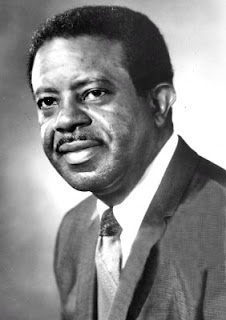 He was treasurer, vice president, and, after King's assassination in 1968, president of the Southern Christian Leadership Conference (SCLC). An advocate of nonviolence as a means to social change, he led the Poor People's Campaign on Washington, D.C., after King's death.  Anderson first sang in Philadelphia church choirs, then studied with Giuseppe Boghetti. She began her concert career in 1924 and achieved her first great successes in Europe. Her rich, wide-ranging voice was superbly suited to opera, lieder, and the spirituals that she included in her concerts and recordings. In 1939, when the Daughters of the American Revolution refused to allow her to perform at Constitution Hall in Washington, D.C., Eleanor Roosevelt resigned her DAR membership in protest and sponsored Anderson's concert at the Lincoln Memorial. In 1955 Anderson made her debut with the Metropolitan Opera. She was appointed an alternate delegate to the United Nations in 1958 and in 1963 was awarded the Presidential Medal of Freedom.  Ellison's earliest published writings were reviews and stories in the politically radical New Masses magazine. His literary reputation rests almost completely on one novel, Invisible Man. A classic of American literature, it draws upon the author's experiences to detail the harrowing progress of a nameless young Black man struggling to live in a hostile society.  Wilson's plays center on the struggles and identity of African Americans and the deleterious effect of white American institutions on Black American life. Wilson's works draw heavily on his own experiences growing up in the Hill district of Pittsburgh, a black ghetto where nearly all of his plays are set. His characters are ordinary people whose histories, frustrations, and aspirations Wilson astutely portrays. His cycle of ten dramas written over a period of more than 20 years include various overlapping characters and themes. In addition to Ma Rainey, it includes Jitney in 1982; Fences, a Pulitzer prize winner from 1987; Joe Turner's Come and Gone in 1988; The Piano Lesson the 1990 Pulitzer prize winner; Two Trains Running from 1992; Seven Guitars from 1995; King Hedley II in 2001; Gem of the Ocean in 2003; and Radio Golf in 2005. Acclaimed as landmarks in the history of Black American culture, these works focus on the major issues confronting African Americans during each of the decades of the 20th century. In 2003, Wilson starred in a production of his autobiographical one-man play How I Learned What I Learned.  Lafayette was seeking men to spy on British general Cornwallis and his army at Yorktown. Impressed with Armistead's intelligence, Lafayette had Armistead pose as a laborer looking for work. He was hired at Cornwallis's camp and was able to relay information about Cornwallis's plans to Lafayette. Armistead also earned the trust of Cornwallis, who asked him to spy on the Americans. As a double agent, Armistead was able to move freely between both camps. He provided Lafayette with critical information that enabled the general to intercept Cornwallis's much-needed naval support and ultimately defeat Cornwallis at Yorktown in Oct. 1781, the decisive battle that ended the Revolution. After the war, Armistead returned to the Armistead plantation as a slave. He met with Lafayette in 1784, when the general visited the United States. Lafayette wrote a glowing recommendation for his former spy, which Armistead used when he petitioned the Virginia House of Delegates for freedom. He was finally freed on New Year's Day 1787, and assumed Lafayette as his surname. He spent the rest of his life as a farmer in Virginia.  Carmichael participated in the Congress of Racial Equality's “freedom rides” in 1961, and by 1964 was a field organizer for the Student Nonviolent Coordinating Committee--SNCC--in Alabama. As SNCC chair in 1966, he ejected more moderate leaders and set off a storm of controversy by calling for “Black power,” a concept he elaborated in a 1967 book. His increasingly separatist politics isolated him from most of the civil-rights movement, and he emigrated to Conakry, Guinea, in 1969. There he spent the rest of his life, calling himself a pan-African revolutionary but largely relegated to the political fringe.  Ailey moved to New York in 1954, where he studied dance with Martha Graham and Charles Weidman and acting with Stella Adler. In 1958 he formed his own company, the American Dance Theater, which, multiracial since 1963, has been internationally acclaimed and has brought recognition to many African-American and Asian dancers via works that combine elements of jazz, modern, and African rhythms.  She was confirmed in September 1993 and angered conservatives from the get-go, as she was vocal in her support of sex education, the distribution of condoms in schools, abortion rights, and the medical use of marijuana. But it was her December 1994 statement that “masturbation is part of human sexuality and a part of something that perhaps should be taught” that prompted President Clinton to seek and receive her resignation.  He escaped around 1750 to work on whaling ships. On March 5, 1770, Boston patriot Samuel Adams convinced sailors and dockworkers to protest the presence of British troops, and Attucks was the leader of the 50 men in the protest, shouting “Don't be afraid,” as they advanced on the British. The soldiers fired on the protestors, killing Attucks and four others in what became known as the Boston Massacre. The bodies of the dead lay in state at Faneuil Hall for three days before receiving a public funeral attended by 10,000 people. Although the soldiers were acquitted of the shootings on the grounds that the sailors were inciting a riot, Attucks and the others became heroes.  After graduating as valedictorian from North Carolina's Shaw University in 1927, Baker moved to New York City, where she lived in utter poverty, the result of the Great Depression. She and a group of others founded the Young Negroes Cooperative League, whose members pooled funds to buy products and services at reduced cost. In 1935, Ella Baker joined the NAACP as a field secretary and later served as its national director. She scaled back her national responsibilities with the group eleven years later but still worked at the local level to improve and integrate New York City's schools. Baker and several Southern Black ministers and activists established the Southern Christian Leadership Conference--SCLC--in 1957; the SCLC was a major force in organizing the civil rights movement. Rev. Martin Luther King, Jr. served as the group's first president and Baker was the director, though she mainly worked behind the scenes, while King was its spokesman. In 1960 Baker left the SCLC when she helped students organize the Student Nonviolent Coordinating Committee--SNCC--at her alma mater, Shaw University. The SNCC's purpose was to give young Black people a more organized voice in the civil rights movement.  During the 1960s she was active in the African-American political movement; she subsequently spent several years in Ghana as editor of the African Review. Her six autobiographical volumes, beginning with I Know Why the Caged Bird Sings, have generally been well-received. She has also published several volumes of poetry, including And I Still Rise. Angelou read her poem “On the Pulse of Morning” at the inauguration of President Clinton in 1993. |

Showing posts with label Harriet Tubman. Show all posts
Showing posts with label Harriet Tubman. Show all posts
Monday, February 24, 2025
Repost: Black History Month: Icons


Sunday, June 02, 2019


Thursday, May 30, 2019
Bobservations
 |
One day, while driving home, we encountered a traffic backup right here in Smallville! I know! Que horror! Luckily, I knew of a shortcut down an old dirt road called Chestnut Ferry; Carlos asked what I was doing.
“I hate the traffic on Dekalb, so I’m going to avoid the light and that intersection and go this way.” “Oh—” “And I can avoid the traffic coming out of Walmart—”
To which Carlos replied:
“You mean the Walmartians?”
And he is right.
|
 |
In the height of ignorance, this week _____, in Japan, said he was not “personally” bothered by recent short-range missile tests North Korea.
Sadly, Japanese Prime Minister Shinzo Abe, standing beside _____, said the missile tests violated U.N. Security Council resolutions and were “of great regret.”
But they don’t bother _____. Asshat.
|
 |
Don't bet on seeing a Harriet Tubman $20 bill anytime soon because the redesigned bill bearing her face, which was supposed to debut next year, will not be coming out for nearly a decade … because _____.
Tubman, who was born into slavery and became a noted abolitionist and political activist, would be the first black woman to have her face on U.S. currency and would appear in 2020 to coincide with the 100th anniversary of the 19th Amendment, which gave women the right to vote.
While running for office, _____ said he did not support putting Tubman on the 20, calling the plan "pure political correctness" and saying they should put Tubman on the oh-so-popular "$2 bill".
_____ is a huge fan of slave owning Andrew Jackson so, yeah, there’s that. Racist.
UPDATE: someone has made a Harriet Tubman stamp and is stamping her face over Jackson’s on the bill. I want one!
 |
 |
Mississippi Congressman, and a cosponsor of that state’s abortion ban Doug McLeod was arrested last week after punching his wife because she took too long to get undressed for sex.
McLeod’s wife said her husband had “just snapped,” and often did so when he was drinking, and ALLEGEDLY whenever a woman doesn’t do what he says. McLeod was taken into custody on a charge of misdemeanor domestic violence and then released on a $1,000 signature bond.
That’s your GOP, America.
|
 |
And, from our Self Loathing Gay File comes the news that a bunch of so-called gay Republicans—quite the oxymoron—including former head of the Log Cabin Republicans, have launched a petition to Senate Majority Leader
Even for themselves; these are gay men and women asking to be denied equality. They are literally opposing their own civil rights.
Just shows to go you that there are stupid, asshatted gays, too.
|
 |
And keeping with this WTF Is Going On thing, a group of panelists on Fox News’—yes, that Fox News—Special Report actually criticized _____ for citing murderous dictator Kim Jong Un in his comments abroad about Joe Biden.
Fox News digital politics editor Chris Stirewalt pointed out to anyone wondering why _____ is “underwater” and trailing in polls at a time when any other incumbent in his position would be “crushing it,” that it’s “stunt like this stuff in Japan are exactly why.”
And co-host Marc Thiessen agreed:
“You don’t attack your political opponents from foreign soil [and especially not by] citing the murderous dictator of North Korea.”
Again, that Fox News bashing _____.
Oh, what a world.
|
 |
Now for some good LGBTQ news … the Supreme Court has denied review of Doe v. Boyertown School District, leaving a ruling in place that allows students to use the locker room or bathroom that matches their gender identity.
The march goes on …
|
 |
Finally … man candy in French ballet dancer Andreas Gieson.
 
He looks gorgeous in a suit, gorgeous in the dance, and gorgeous when he’s nekkid.

What’s not to love?
|
 |
Luke Evans. If this is what he looks like on Monday mornings, I want some.
Hell, even is this is a one off, I want some.
|
Friday, February 27, 2009
Black History Month
 African American abolitionist Harriet Tubman was born into slavery, but escaped to Philadelphia in 1849, and subsequently became one of the most successful “conductors” on the Underground Railroad.
Returning to the South more than a dozen times, she is generally credited with leading more than 300 slaves--including her parents and brother--to freedom, sometimes forcing the timid ahead with a loaded revolver.
She became a speaker on the anti-slavery lecture circuit and a friend of the principal abolitionists; John Brown almost certainly confided his Harpers Ferry plan to her.
During the Civil War, Tubman attached herself to the Union forces in coastal South Carolina, serving as a nurse, cook, laundress, scout, and spy, and in 1863 she played an important part in a raid that resulted in the freeing of more than 700 slaves.
African American abolitionist Harriet Tubman was born into slavery, but escaped to Philadelphia in 1849, and subsequently became one of the most successful “conductors” on the Underground Railroad.
Returning to the South more than a dozen times, she is generally credited with leading more than 300 slaves--including her parents and brother--to freedom, sometimes forcing the timid ahead with a loaded revolver.
She became a speaker on the anti-slavery lecture circuit and a friend of the principal abolitionists; John Brown almost certainly confided his Harpers Ferry plan to her.
During the Civil War, Tubman attached herself to the Union forces in coastal South Carolina, serving as a nurse, cook, laundress, scout, and spy, and in 1863 she played an important part in a raid that resulted in the freeing of more than 700 slaves. African American civil-rights leader Julian Bond, was a a student at Morehouse College, participating in sit-ins at segregated Atlanta restaurants. In 1960 he founded the Student Nonviolent Coordinating Committee--SNCC--serving as its communications director until 1965, when he was elected to the Georgia assembly.
Bond was denied his seat because of his statements opposing the war in Vietnam, but reelected in 1966, he began serving after the U.S. Supreme Court upheld his right to hold office. A state representative until 1974, he then served as a state senator from 1975 until 1987.
Bond led a group of black delegates to the 1968 Democratic Convention where he challenged the party's unit rule and won representation at the expense of the regular Georgia delegation.
In 1986 he lost a Georgia congressional race to John Lewis.
In 1998 he became chairman of the National Association for the Advancement of Colored People.
African American civil-rights leader Julian Bond, was a a student at Morehouse College, participating in sit-ins at segregated Atlanta restaurants. In 1960 he founded the Student Nonviolent Coordinating Committee--SNCC--serving as its communications director until 1965, when he was elected to the Georgia assembly.
Bond was denied his seat because of his statements opposing the war in Vietnam, but reelected in 1966, he began serving after the U.S. Supreme Court upheld his right to hold office. A state representative until 1974, he then served as a state senator from 1975 until 1987.
Bond led a group of black delegates to the 1968 Democratic Convention where he challenged the party's unit rule and won representation at the expense of the regular Georgia delegation.
In 1986 he lost a Georgia congressional race to John Lewis.
In 1998 he became chairman of the National Association for the Advancement of Colored People. African American civil-rights leader Ralph David Abernathy was a Baptist minister who helped Martin Luther King, Jr., organize the Montgomery bus boycott in 1955. He was treasurer, vice president, and, after King's assassination in 1968, president of the Southern Christian Leadership Conference (SCLC).
An advocate of nonviolence as a means to social change, he led the Poor People's Campaign on Washington, D.C., after King's death.
African American civil-rights leader Ralph David Abernathy was a Baptist minister who helped Martin Luther King, Jr., organize the Montgomery bus boycott in 1955. He was treasurer, vice president, and, after King's assassination in 1968, president of the Southern Christian Leadership Conference (SCLC).
An advocate of nonviolence as a means to social change, he led the Poor People's Campaign on Washington, D.C., after King's death.
 African American contralto, Marian Anderson was the first African American to be named a permanent member of the Metropolitan Opera Company, as well as the first to perform at the White House.
Anderson first sang in Philadelphia church choirs, then studied with Giuseppe Boghetti. She began her concert career in 1924 and achieved her first great successes in Europe.
Her rich, wide-ranged voice was superbly suited to opera, lieder, and the spirituals that she included in her concerts and recordings.
In 1939, when the Daughters of the American Revolution refused to allow her to perform at Constitution Hall in Washington, D.C., Eleanor Roosevelt resigned her DAR membership in protest and sponsored Anderson's concert at the Lincoln Memorial.
In 1955 Anderson made her debut with the Metropolitan Opera. She was appointed an alternate delegate to the United Nations in 1958 and in 1963 was awarded the Presidential Medal of Freedom.
African American contralto, Marian Anderson was the first African American to be named a permanent member of the Metropolitan Opera Company, as well as the first to perform at the White House.
Anderson first sang in Philadelphia church choirs, then studied with Giuseppe Boghetti. She began her concert career in 1924 and achieved her first great successes in Europe.
Her rich, wide-ranged voice was superbly suited to opera, lieder, and the spirituals that she included in her concerts and recordings.
In 1939, when the Daughters of the American Revolution refused to allow her to perform at Constitution Hall in Washington, D.C., Eleanor Roosevelt resigned her DAR membership in protest and sponsored Anderson's concert at the Lincoln Memorial.
In 1955 Anderson made her debut with the Metropolitan Opera. She was appointed an alternate delegate to the United Nations in 1958 and in 1963 was awarded the Presidential Medal of Freedom.
 African American author Ralph Ellison was a graduate of the Tuskegee Institute.
Originally a trumpet player and aspiring composer, he moved to New York City in 1936, where he met Langston Hughes, who became his mentor, and became friends with Richard Wright, who radicalized his thinking.
Ellison's earliest published writings were reviews and stories in the politically radical New Masses magazine. His literary reputation rests almost completely on one novel, Invisible Man. A classic of American literature, it draws upon the author's experiences to detail the harrowing progress of a nameless young black man struggling to live in a hostile society.
African American author Ralph Ellison was a graduate of the Tuskegee Institute.
Originally a trumpet player and aspiring composer, he moved to New York City in 1936, where he met Langston Hughes, who became his mentor, and became friends with Richard Wright, who radicalized his thinking.
Ellison's earliest published writings were reviews and stories in the politically radical New Masses magazine. His literary reputation rests almost completely on one novel, Invisible Man. A classic of American literature, it draws upon the author's experiences to detail the harrowing progress of a nameless young black man struggling to live in a hostile society.
 African American playwright and poet August Wilson was a largely self-educated man.
Wilson first attracted wide critical attention with his Broadway debut, Ma Rainey's Black Bottom in 1984--a play set in 1927 that dramatized the clash between the blues diva and a member of her band, and the larger conflicts brought about by racist American society.
Wilson's plays center on the struggles and identity of African Americans and the deleterious effect of white American institutions on black American life. Wilson's works draw heavily on his own experiences growing up in the Hill district of Pittsburgh, a black ghetto where nearly all of his plays are set.
His characters are ordinary people whose histories, frustrations, and aspirations Wilson astutely portrays. His cycle of ten dramas written over a period of more than 20 years include various overlapping characters and themes. In addition to Ma Rainey, it includes Jitney in 1982; Fences, a Pulitzer prize winner from 1987; Joe Turner's Come and Gone in 1988; The Piano Lesson the 1990 Pulitzer prize winner; Two Trains Running from 1992; Seven Guitars from 1995; King Hedley II in 2001; Gem of the Ocean in 2003; and Radio Golf in 2005.
Acclaimed as landmarks in the history of black American culture, these works focus on the major issues confronting African Americans during each of the decades of the 20th century.
In 2003, Wilson starred in a production of his autobiographical one-man play How I Learned What I Learned.
African American playwright and poet August Wilson was a largely self-educated man.
Wilson first attracted wide critical attention with his Broadway debut, Ma Rainey's Black Bottom in 1984--a play set in 1927 that dramatized the clash between the blues diva and a member of her band, and the larger conflicts brought about by racist American society.
Wilson's plays center on the struggles and identity of African Americans and the deleterious effect of white American institutions on black American life. Wilson's works draw heavily on his own experiences growing up in the Hill district of Pittsburgh, a black ghetto where nearly all of his plays are set.
His characters are ordinary people whose histories, frustrations, and aspirations Wilson astutely portrays. His cycle of ten dramas written over a period of more than 20 years include various overlapping characters and themes. In addition to Ma Rainey, it includes Jitney in 1982; Fences, a Pulitzer prize winner from 1987; Joe Turner's Come and Gone in 1988; The Piano Lesson the 1990 Pulitzer prize winner; Two Trains Running from 1992; Seven Guitars from 1995; King Hedley II in 2001; Gem of the Ocean in 2003; and Radio Golf in 2005.
Acclaimed as landmarks in the history of black American culture, these works focus on the major issues confronting African Americans during each of the decades of the 20th century.
In 2003, Wilson starred in a production of his autobiographical one-man play How I Learned What I Learned.
 African American James Lafayette Armistead was a patriot of the American Revolution. A slave in Virginia, Armistead sought and received permission from his master, William Armistead, to enlist under General Marquis de Lafayette, a French officer who joined Washington's army during the Revolutionary War.
Lafayette was seeking men to spy on British general Cornwallis and his army at Yorktown. Impressed with Armistead's intelligence, Lafayette had Armistead pose as a laborer looking for work. He was hired at Cornwallis's camp and was able to relay information about Cornwallis's plans to Lafayette.
Armistead also earned the trust of Cornwallis, who asked him to spy on the Americans.
As a double agent, Armistead was able to move freely between both camps. He provided Lafayette with critical information that enabled the general to intercept Cornwallis's much-needed naval support and ultimately defeat Cornwallis at Yorktown in Oct. 1781, the decisive battle that ended the Revolution.
After the war, Armistead returned to the Armistead plantation as a slave. He met with Lafayette in 1784, when the general visited the United States. Lafayette wrote a glowing recommendation for his former spy, which Armistead used when he petitioned the Virginia House of Delegates for freedom.
He was finally freed on New Year's Day 1787, and assumed Lafayette as his surname. He spent the rest of his life as a farmer in Virginia.
African American James Lafayette Armistead was a patriot of the American Revolution. A slave in Virginia, Armistead sought and received permission from his master, William Armistead, to enlist under General Marquis de Lafayette, a French officer who joined Washington's army during the Revolutionary War.
Lafayette was seeking men to spy on British general Cornwallis and his army at Yorktown. Impressed with Armistead's intelligence, Lafayette had Armistead pose as a laborer looking for work. He was hired at Cornwallis's camp and was able to relay information about Cornwallis's plans to Lafayette.
Armistead also earned the trust of Cornwallis, who asked him to spy on the Americans.
As a double agent, Armistead was able to move freely between both camps. He provided Lafayette with critical information that enabled the general to intercept Cornwallis's much-needed naval support and ultimately defeat Cornwallis at Yorktown in Oct. 1781, the decisive battle that ended the Revolution.
After the war, Armistead returned to the Armistead plantation as a slave. He met with Lafayette in 1784, when the general visited the United States. Lafayette wrote a glowing recommendation for his former spy, which Armistead used when he petitioned the Virginia House of Delegates for freedom.
He was finally freed on New Year's Day 1787, and assumed Lafayette as his surname. He spent the rest of his life as a farmer in Virginia.
 African American Stokely Carmichael lived in New York City after 1952 and graduated from Howard University in 1964. Carmichael participated in the Congress of Racial Equality's “freedom rides” in 1961, and by 1964 was a field organizer for the Student Nonviolent Coordinating Committee--SNCC--in Alabama.
As SNCC chair in 1966, he ejected more moderate leaders and set off a storm of controversy by calling for “black power,” a concept he elaborated in a 1967 book. His increasingly separatist politics isolated him from most of the civil-rights movement, and he emigrated to Conakry, Guinea, in 1969. There he spent the rest of his life, calling himself a pan-African revolutionary but largely relegated to the political fringe.
African American Stokely Carmichael lived in New York City after 1952 and graduated from Howard University in 1964. Carmichael participated in the Congress of Racial Equality's “freedom rides” in 1961, and by 1964 was a field organizer for the Student Nonviolent Coordinating Committee--SNCC--in Alabama.
As SNCC chair in 1966, he ejected more moderate leaders and set off a storm of controversy by calling for “black power,” a concept he elaborated in a 1967 book. His increasingly separatist politics isolated him from most of the civil-rights movement, and he emigrated to Conakry, Guinea, in 1969. There he spent the rest of his life, calling himself a pan-African revolutionary but largely relegated to the political fringe.
 African American Alvin Ailey, Jr studied dance in Los Angeles with Lester Horton, whose strong, dramatic style and views about multiracial casting influenced his choreography and artistic direction.
Ailey moved to New York in 1954, where he studied dance with Martha Graham and Charles Weidman and acting with Stella Adler. In 1958 he formed his own company, the American Dance Theater, which, multiracial since 1963, has been internationally acclaimed and has brought recognition to many African-American and Asian dancers via works that combine elements of jazz, modern, and African rhythms.
African American Alvin Ailey, Jr studied dance in Los Angeles with Lester Horton, whose strong, dramatic style and views about multiracial casting influenced his choreography and artistic direction.
Ailey moved to New York in 1954, where he studied dance with Martha Graham and Charles Weidman and acting with Stella Adler. In 1958 he formed his own company, the American Dance Theater, which, multiracial since 1963, has been internationally acclaimed and has brought recognition to many African-American and Asian dancers via works that combine elements of jazz, modern, and African rhythms.
 African American Joycelyn Jones Elders briefly served as the surgeon general of the United States under President Clinton. She was confirmed in September 1993 and angered conservatives from the get-go, as she was vocal in her support of sex education, the distribution of condoms in schools, abortion rights, and the medical use of marijuana.
But it was her December 1994 statement that “masturbation is part of human sexuality and a part of something that perhaps should be taught” that prompted President Clinton to seek and receive her resignation.
African American Joycelyn Jones Elders briefly served as the surgeon general of the United States under President Clinton. She was confirmed in September 1993 and angered conservatives from the get-go, as she was vocal in her support of sex education, the distribution of condoms in schools, abortion rights, and the medical use of marijuana.
But it was her December 1994 statement that “masturbation is part of human sexuality and a part of something that perhaps should be taught” that prompted President Clinton to seek and receive her resignation.
 African American Crispus Attucks was an American revolutionary patriot of mixed African and American Indian ancestry; Attucks was the slave of William Brown of Framingham, Mass. He escaped around 1750 to work on whaling ships.
On March 5, 1770, Boston patriot Samuel Adams convinced sailors and dockworkers to protest the presence of British troops, and Attucks was the leader of the 50 men in the protest, shouting “Don't be afraid,” as they advanced on the British. The soldiers fired on the protestors, killing Attucks and four others in what became known as the Boston Massacre. The bodies of the dead lay in state at Faneuil Hall for three days before receiving a public funeral attended by 10,000 people.
Although the soldiers were acquitted of the shootings on the grounds that the seamen were inciting a riot, Attucks and the others became heroes.
African American Crispus Attucks was an American revolutionary patriot of mixed African and American Indian ancestry; Attucks was the slave of William Brown of Framingham, Mass. He escaped around 1750 to work on whaling ships.
On March 5, 1770, Boston patriot Samuel Adams convinced sailors and dockworkers to protest the presence of British troops, and Attucks was the leader of the 50 men in the protest, shouting “Don't be afraid,” as they advanced on the British. The soldiers fired on the protestors, killing Attucks and four others in what became known as the Boston Massacre. The bodies of the dead lay in state at Faneuil Hall for three days before receiving a public funeral attended by 10,000 people.
Although the soldiers were acquitted of the shootings on the grounds that the seamen were inciting a riot, Attucks and the others became heroes.
 African American civil rights activist Ella Baker was a driving force in the creation of the country's premier civil rights organizations.
After graduating as valedictorian from North Carolina's Shaw University in 1927, Baker moved to New York City, where she lived in utter poverty, the result of the Great Depression. She and a group of others, founded the Young Negroes Cooperative League, whose members pooled funds to buy products and services at reduced cost.
In 1935, Ella Baker joined the NAACP as a field secretary and later served as a its national director. She scaled back her national responsibilities with the group eleven years later, but still worked at the local level to improve and integrate New York City's schools.
Baker and several Southern black ministers and activists established the Southern Christian Leadership Conference--SCLC--in 1957; the SCLC was a major force in organizing the civil rights movement. Rev. Martin Luther King, Jr. served as the group's first president and Baker was the director, though she mainly worked behind the scenes, while King was its spokesman.
In 1960 Baker left the SCLC when she helped students organize the Student Nonviolent Coordinating Committee--SNCC--at her alma mater, Shaw University. The SNCC's purpose was to give young blacks a more organized voice in the civil rights movement.
African American civil rights activist Ella Baker was a driving force in the creation of the country's premier civil rights organizations.
After graduating as valedictorian from North Carolina's Shaw University in 1927, Baker moved to New York City, where she lived in utter poverty, the result of the Great Depression. She and a group of others, founded the Young Negroes Cooperative League, whose members pooled funds to buy products and services at reduced cost.
In 1935, Ella Baker joined the NAACP as a field secretary and later served as a its national director. She scaled back her national responsibilities with the group eleven years later, but still worked at the local level to improve and integrate New York City's schools.
Baker and several Southern black ministers and activists established the Southern Christian Leadership Conference--SCLC--in 1957; the SCLC was a major force in organizing the civil rights movement. Rev. Martin Luther King, Jr. served as the group's first president and Baker was the director, though she mainly worked behind the scenes, while King was its spokesman.
In 1960 Baker left the SCLC when she helped students organize the Student Nonviolent Coordinating Committee--SNCC--at her alma mater, Shaw University. The SNCC's purpose was to give young blacks a more organized voice in the civil rights movement.
 African American writer and performer, Maya Angelou toured Europe and Africa in the 1950s in the musical Porgy and Bess. She sang in New York City nightclubs, joined the Harlem Writers Guild, and took part in several off-Broadway productions, including Genet's The Blacks and her own Cabaret for Freedom.
During the 1960s she was active in the African-American political movement; she subsequently spent several years in Ghana as editor of the African Review. Her six autobiographical volumes, beginning with I Know Why the Caged Bird Sings, have generally been well-received. She has also published several volumes of poetry, including And I Still Rise.
Angelou read her poem “On the Pulse of Morning” at the inauguration of President Clinton in 1993.
African American writer and performer, Maya Angelou toured Europe and Africa in the 1950s in the musical Porgy and Bess. She sang in New York City nightclubs, joined the Harlem Writers Guild, and took part in several off-Broadway productions, including Genet's The Blacks and her own Cabaret for Freedom.
During the 1960s she was active in the African-American political movement; she subsequently spent several years in Ghana as editor of the African Review. Her six autobiographical volumes, beginning with I Know Why the Caged Bird Sings, have generally been well-received. She has also published several volumes of poetry, including And I Still Rise.
Angelou read her poem “On the Pulse of Morning” at the inauguration of President Clinton in 1993.
Subscribe to:
Posts (Atom)