 |
First off, while this house is located in Altadena, a check through local websites doesn’t show that it was lost in the recent wildfires in California … This Craftsman compound—a main, original home, and two ADU’s on the back of the property—presents a multitude of possibilities to live, work, create, invest, and host. Framed by two majestic California live oaks on a rare 75-foot-wide, 12,000 square foot lot it offers three unique homes, each one reimagined with the utmost attention to detail, including white oak floors, custom red oak cabinetry, custom millwork details throughout, and a cohesive color story inspired by the main residence’s distinct Arts & Crafts motif wallpaper from Bradbury & Bradbury. The primary residence employs an atmospheric color palette, rich materials, and a variety of unexpected textures ranging from the original red brick to breccia antica marble. There is original woodwork throughout, a fireplace in the living room, a rustic, though modernized, kitchen, along with three bedrooms and two bathrooms. Out back there are two guest cottages that feature vaulted ceilings, an open plan living room and kitchen area, one bathroom, and a large bedroom with office space; these cottages can be used as rental income for tenants, guests, office space, art space, studio space, or whatever one my fantasize; and out behind each guest house is a covered patio and firepit area. It’s perfect to live in and rent out the back houses to help with the mortgage … or, in light of what’s happened in Altadena, offer the spaces up to those who did lose their homes.                 |

Wednesday, February 26, 2025
Architecture Wednesday: Altadena Craftsman Compound


Tuesday, February 25, 2025
Repost: Black History Month: Lorraine Hansberry


Monday, February 24, 2025
Repost: Black History Month: Icons
 |
African American abolitionist Harriet Tubman was born into slavery, but escaped to Philadelphia in 1849, and subsequently became one of the most successful “conductors” on the Underground Railroad.  During the Civil War, Tubman attached herself to the Union forces in coastal South Carolina, serving as a nurse, cook, laundress, scout, and spy, and in 1863 she played an important part in a raid that resulted in the freeing of more than 700 slaves.  A state representative until 1974, he then served as a state senator from 1975 until 1987. Bond led a group of Black delegates to the 1968 Democratic Convention where he challenged the party's unit rule and won representation at the expense of the regular Georgia delegation. In 1986 he lost a Georgia congressional race to John Lewis. In 1998 he became chairman of the National Association for the Advancement of Colored People. 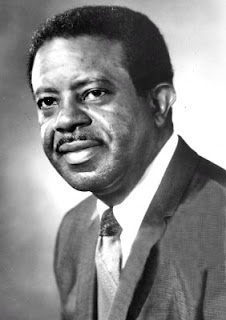 He was treasurer, vice president, and, after King's assassination in 1968, president of the Southern Christian Leadership Conference (SCLC). An advocate of nonviolence as a means to social change, he led the Poor People's Campaign on Washington, D.C., after King's death.  Anderson first sang in Philadelphia church choirs, then studied with Giuseppe Boghetti. She began her concert career in 1924 and achieved her first great successes in Europe. Her rich, wide-ranging voice was superbly suited to opera, lieder, and the spirituals that she included in her concerts and recordings. In 1939, when the Daughters of the American Revolution refused to allow her to perform at Constitution Hall in Washington, D.C., Eleanor Roosevelt resigned her DAR membership in protest and sponsored Anderson's concert at the Lincoln Memorial. In 1955 Anderson made her debut with the Metropolitan Opera. She was appointed an alternate delegate to the United Nations in 1958 and in 1963 was awarded the Presidential Medal of Freedom.  Ellison's earliest published writings were reviews and stories in the politically radical New Masses magazine. His literary reputation rests almost completely on one novel, Invisible Man. A classic of American literature, it draws upon the author's experiences to detail the harrowing progress of a nameless young Black man struggling to live in a hostile society.  Wilson's plays center on the struggles and identity of African Americans and the deleterious effect of white American institutions on Black American life. Wilson's works draw heavily on his own experiences growing up in the Hill district of Pittsburgh, a black ghetto where nearly all of his plays are set. His characters are ordinary people whose histories, frustrations, and aspirations Wilson astutely portrays. His cycle of ten dramas written over a period of more than 20 years include various overlapping characters and themes. In addition to Ma Rainey, it includes Jitney in 1982; Fences, a Pulitzer prize winner from 1987; Joe Turner's Come and Gone in 1988; The Piano Lesson the 1990 Pulitzer prize winner; Two Trains Running from 1992; Seven Guitars from 1995; King Hedley II in 2001; Gem of the Ocean in 2003; and Radio Golf in 2005. Acclaimed as landmarks in the history of Black American culture, these works focus on the major issues confronting African Americans during each of the decades of the 20th century. In 2003, Wilson starred in a production of his autobiographical one-man play How I Learned What I Learned.  Lafayette was seeking men to spy on British general Cornwallis and his army at Yorktown. Impressed with Armistead's intelligence, Lafayette had Armistead pose as a laborer looking for work. He was hired at Cornwallis's camp and was able to relay information about Cornwallis's plans to Lafayette. Armistead also earned the trust of Cornwallis, who asked him to spy on the Americans. As a double agent, Armistead was able to move freely between both camps. He provided Lafayette with critical information that enabled the general to intercept Cornwallis's much-needed naval support and ultimately defeat Cornwallis at Yorktown in Oct. 1781, the decisive battle that ended the Revolution. After the war, Armistead returned to the Armistead plantation as a slave. He met with Lafayette in 1784, when the general visited the United States. Lafayette wrote a glowing recommendation for his former spy, which Armistead used when he petitioned the Virginia House of Delegates for freedom. He was finally freed on New Year's Day 1787, and assumed Lafayette as his surname. He spent the rest of his life as a farmer in Virginia.  Carmichael participated in the Congress of Racial Equality's “freedom rides” in 1961, and by 1964 was a field organizer for the Student Nonviolent Coordinating Committee--SNCC--in Alabama. As SNCC chair in 1966, he ejected more moderate leaders and set off a storm of controversy by calling for “Black power,” a concept he elaborated in a 1967 book. His increasingly separatist politics isolated him from most of the civil-rights movement, and he emigrated to Conakry, Guinea, in 1969. There he spent the rest of his life, calling himself a pan-African revolutionary but largely relegated to the political fringe.  Ailey moved to New York in 1954, where he studied dance with Martha Graham and Charles Weidman and acting with Stella Adler. In 1958 he formed his own company, the American Dance Theater, which, multiracial since 1963, has been internationally acclaimed and has brought recognition to many African-American and Asian dancers via works that combine elements of jazz, modern, and African rhythms.  She was confirmed in September 1993 and angered conservatives from the get-go, as she was vocal in her support of sex education, the distribution of condoms in schools, abortion rights, and the medical use of marijuana. But it was her December 1994 statement that “masturbation is part of human sexuality and a part of something that perhaps should be taught” that prompted President Clinton to seek and receive her resignation.  He escaped around 1750 to work on whaling ships. On March 5, 1770, Boston patriot Samuel Adams convinced sailors and dockworkers to protest the presence of British troops, and Attucks was the leader of the 50 men in the protest, shouting “Don't be afraid,” as they advanced on the British. The soldiers fired on the protestors, killing Attucks and four others in what became known as the Boston Massacre. The bodies of the dead lay in state at Faneuil Hall for three days before receiving a public funeral attended by 10,000 people. Although the soldiers were acquitted of the shootings on the grounds that the sailors were inciting a riot, Attucks and the others became heroes.  After graduating as valedictorian from North Carolina's Shaw University in 1927, Baker moved to New York City, where she lived in utter poverty, the result of the Great Depression. She and a group of others founded the Young Negroes Cooperative League, whose members pooled funds to buy products and services at reduced cost. In 1935, Ella Baker joined the NAACP as a field secretary and later served as its national director. She scaled back her national responsibilities with the group eleven years later but still worked at the local level to improve and integrate New York City's schools. Baker and several Southern Black ministers and activists established the Southern Christian Leadership Conference--SCLC--in 1957; the SCLC was a major force in organizing the civil rights movement. Rev. Martin Luther King, Jr. served as the group's first president and Baker was the director, though she mainly worked behind the scenes, while King was its spokesman. In 1960 Baker left the SCLC when she helped students organize the Student Nonviolent Coordinating Committee--SNCC--at her alma mater, Shaw University. The SNCC's purpose was to give young Black people a more organized voice in the civil rights movement.  During the 1960s she was active in the African-American political movement; she subsequently spent several years in Ghana as editor of the African Review. Her six autobiographical volumes, beginning with I Know Why the Caged Bird Sings, have generally been well-received. She has also published several volumes of poetry, including And I Still Rise. Angelou read her poem “On the Pulse of Morning” at the inauguration of President Clinton in 1993. |
A Day in the Life of Joe the Republican
 |
Joe gets up at 6:00am to prepare his morning coffee. He fills his pot full of good clean drinking water because some liberal fought for minimum water quality standards. He takes his daily medication with his first swallow of coffee. His medications are safe to take because some liberal fought to insure their safety and that they work as advertised. All but $10.00 of his medications are paid for by his employer’s medical plan because some liberal union workers fought their employers for paid medical insurance, so now Joe gets it too. He prepares his morning breakfast, bacon and eggs this day. Joe’s bacon is safe to eat because some liberal fought for laws to regulate the meat packing industry. Joe takes his morning shower, reaching for his shampoo. His bottle is properly labeled with every ingredient and the amount of its contents because some liberal fought for his right to know what he was putting on his body and how much it contained. Joe dresses, walks outside and takes a deep breath. The air he breathes is clean because some tree hugging liberal fought for laws to stop industries from polluting our air. He walks to the subway station for his government subsidized ride to work; it saves him considerable money in parking and transportation fees. You see, some liberal fought for affordable public transportation, which gives everyone the opportunity to be a contributor. Joe begins his work day; he has a good job with excellent pay, medical benefits, retirement, paid holidays and vacation because some liberal union members fought and died for these working standards. Joe’s employer pays these standards because Joe’s employer doesn’t want his employees to call the union. If Joe is hurt on the job or becomes unemployed he’ll get a worker compensation or unemployment check, because some liberal didn’t think he should lose his home because of his temporary misfortune. It’s noon time. Joe needs to make a bank deposit, so he can pay some bills. Joe’s deposit is federally insured by the FSLIC because some liberal wanted to protect Joe’s money from unscrupulous bankers who ruined the banking system before the Depression. Joe has to pay his Fannie Mae underwritten mortgage and his below-market federal student loan because some stupid liberal decided that Joe and the government would be better off if he was educated and earned more money over his lifetime. Joe is home from work, he plans to visit his father this evening at his farm home in the country. He gets in his car for the drive to Dad’s; his car is among the safest in the world because some liberal fought for car safety standards. Joe arrives at his boyhood home. He was the third generation to live in the house financed by the Farmers Home Administration because bankers didn’t want to make rural loans. The house didn’t have electricity until some big government liberal stuck his nose where it didn’t belong and demanded rural electrification. Those rural Republicans would still be sitting in the dark. Joe is happy to see his Dad, who is now retired. His Dad lives on Social Security and his union pension, because some liberal made sure he could take care of himself so Joe wouldn’t have to. After his visit with Dad, he gets back in his car for the ride home. He turns on a radio talk show. The host keeps saying that liberals are bad and conservatives are good. He doesn’t tell Joe that his beloved Republicans have fought against every protection and benefit Joe enjoys throughout his day) Joe agrees: “We don’t need those big government liberals ruining our lives; after all, I’m a self-made man who believes everyone should take care of themselves, just like I have.” Don’t be like Joe; he’s a f*cking moron. |